
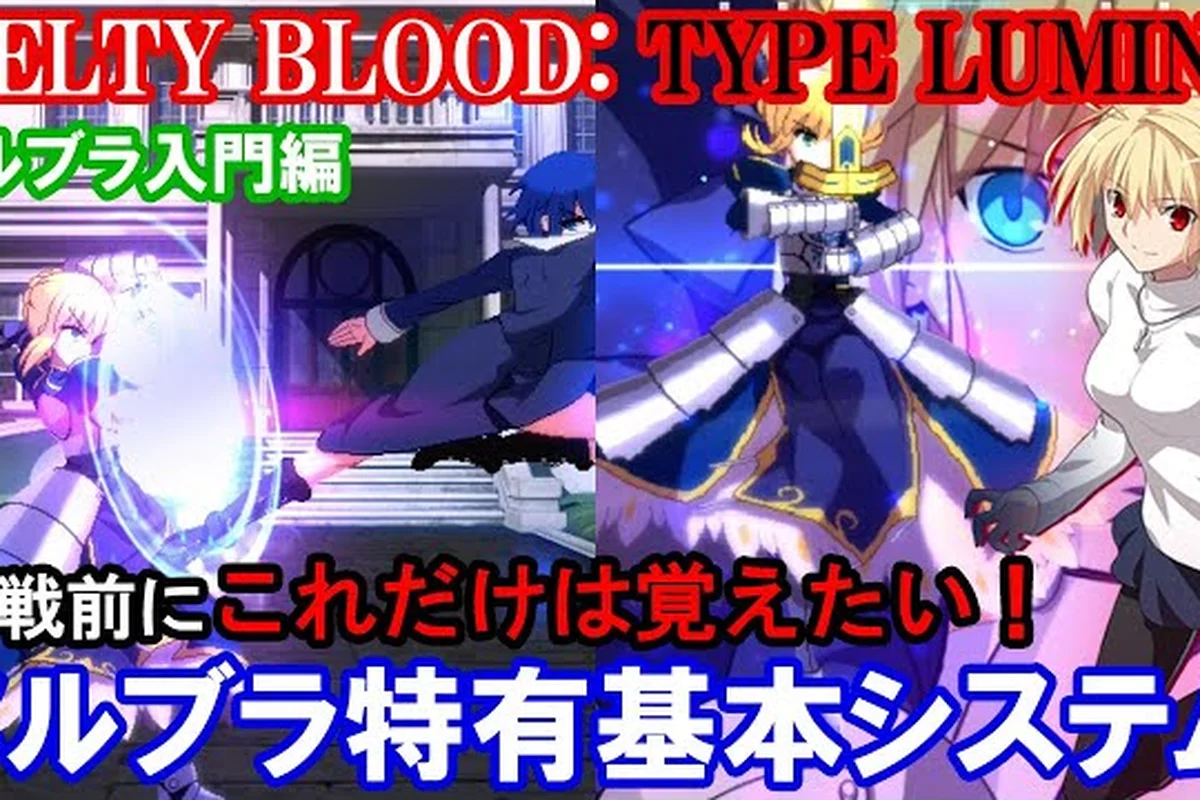
Picking up Melty Blood: Twi-Lumina for the first time can feel like stepping into a long-running Tsukihime spinoff with a stack of new systems on top of an already technical fighting game foundation. This Melty Blood: Twi-Lumina beginner guide breaks the opening hours into the same handful of decisions a newcomer has to make in their first sitting — what to learn in the training room, which mode teaches the core loop fastest, and which button to press when things get scary. The April 22, 2027 release window, the addition of the new Lumina gauge, and the appearance of the original protagonist Len all change how the first session should be approached, so the priorities below are tuned to the current build of the game rather than the 2021 release it follows.
Understanding the Twi-Lumina Core Loop Before You Touch a Stick
Every new player's first hour in Twi-Lumina should be about one thing: learning the Act and Duel control schemes. These are not difficulty settings in the traditional sense; they are two parallel ways of routing the same moves to the controller, and which one you pick dictates how much the game helps you through a combo. According to the August 2026 FGO Fes. TYPE-MOON TIMES report carried by Automaton, the game ships with both schemes so that newcomers and veterans can play on the same lobby without anyone being forced into a style they cannot execute. Picking Act versus Duel is the single highest-leverage decision in any Melty Blood: Twi-Lumina beginner guide, because changing it later means re-learning button habits that you have already built into muscle memory.
| Control Scheme | Best For | Combo Input Style | Matchup Pressure |
|---|---|---|---|
| Act Scheme | First-time fighters, players coming from other anime fighters | Auto-combo routes, simpler command normals, fewer manual chain timings | Lower; relies on system to confirm hits |
| Duel Scheme | Returning Type Lumina players, tournament-bound beginners | Manual chain timing, full access to original routes, more cancels | Higher; expected to confirm hits manually |
| Rapid Beat (either scheme) | Players who want the autocombo safety net without giving up routing depth | Holds the autocombo button to extend a string into a launcher | Medium; depends on the opponent's defense |
The other system that has to be understood before any real match is the new Lumina Gauge. The classic Moon gauge from the 2021 release has been replaced; the Lumina gauge now serves as the central resource that feeds both Beetle (EX) specials and the new Gauntlet technique, which Automaton describes as a blow-away tool that gives the attacker breathing room in the middle of a blockstring. Because Lumina builds passively through successful offense and spending it on a wrong read can leave you flat-footed, this is the second pillar of any twi-lumina beginner guide — every new player should know what each Lumina action does before they commit to it in a real round.
The last foundational element is the Grand Scenario Mode, a Kinoko Nasu-written narrative path that walks players through Souya City battles in a story-first wrapper. Even if the campaign is not your long-term destination, the Grand Scenario is the cleanest way to learn the timing of the Lumina gauge, the feel of the Gauntlet blow-away, and the rhythm of Rapid Beat routes in low-pressure fights. It is the single best choice for a first session and most community reports agree that players who skip it end up relearning its lessons in ranked later.
Picking Your First Fighter in Twi-Lumina
The roster is the second decision a new player has to make, and it is more consequential than it looks. Twi-Lumina carries the visual update and the bulk of the cast from the 2021 entry, then layers in new characters like Len (voiced by Ishihara Kaori per the official Automaton report), so a new player is choosing between an updated classic and a brand-new toolkit that nobody outside the developer team has a long lab log on. The official Melty Blood: Twi-Lumina wiki and community resources will eventually publish full frame data for every new face, but on day one, your choice is shaped by which of the established strengths you would rather inherit.
| Character | Style | Beginner Fit | Standout Tool | Risk for New Players |
|---|---|---|---|---|
| Shiki Tohno | Balanced rushdown | High | Strong mid-screen control, full Lumina routing | None serious; the safest pick |
| Arcueid | Aggressive pressure | High | High damage routes, big corner carry | Can overextend without Lumina discipline |
| Len (new) | Original protagonist, full game-style toolkit | Medium | Story integration, fresh normals | Frame data is still being mapped; expect surprises |
| Kohaku | Puppet zoner | Low | Strong keepaway, bait-and-punish | Defensive play reads poorly until you learn the Lumina gauge |
A useful rule for first-session character choice: pick the one whose combo video you do not fall asleep watching. The combat in Twi-Lumina is a tool kit, and the character you enjoy pressing buttons with is the one you will actually drill. The official Melty Blood: Twi-Lumina site carries the launch roster and platform list, which is the cleanest place to confirm whether your pick is in the launch day-one build before you commit.
If you want a short, decisive answer, the Melty Blood: Twi-Lumina ranked guide breaks down how each top-tier candidate plays in the first ladder week, which is useful when you are about to spend a long evening in the lab. Treat that article as a complement to this twi-lumina beginner guide rather than a substitute, because the ranked guide assumes you already know the Lumina gauge and the Gauntlet.
Your First Hour in Twi-Lumina: A Step-by-Step Plan
Knowing the systems is one thing; running a real first session is another. The step-by-step plan below compresses what most experienced players eventually settle on after a few evenings, and it is designed so a brand-new player can finish it inside a single 60-minute sitting. The order matters because each step depends on something the previous one taught you, and skipping ahead is the most common reason a new player walks away from the controller frustrated on day one.
| Step | Time | Action | Success Signal |
|---|---|---|---|
| 1. Boot Grand Scenario Mode | 0–10 min | Play through the first story battle, focus on watching the Lumina gauge | You can name the gauge that replaces the Moon gauge |
| 2. Run the Tutorial Prompts | 10–20 min | Finish the Act/Duel selector prompt and the Gauntlet prompt | You can explain what Gauntlet does without looking it up |
| 3. Enter Training Mode | 20–35 min | Pick your chosen character, set a dummy to random block, practice one BnB | You can land a 3-hit combo off a confirmed hit 5 times in a row |
| 4. Fight a CPU Opponent | 35–50 min | Set difficulty to mid, focus on blocking, Lumina discipline, and Gauntlet punishes | You win more rounds than you lose across 5 matches |
| 5. Play One Online Match | 50–60 min | Use the rollback netcode to find one human opponent, expect to lose | You finish the match without panic-mashing and can name one thing your opponent did well |
Each of those five steps has a measurable success signal, and the signals are designed to build on each other. If you cannot pass step 3, do not move to step 4 — go back to the training room and try the combo off a different starter normal. The official MELTY BLOOD: TWI-LUMINA Steam page confirms the rollback netcode infrastructure is in place for that final online step, so the only thing standing between you and a human match is having the combo you want to land under your fingers.
A common mistake is to spend the entire first hour in training mode. Training mode is a tool, not a goal — it is meant to fix one specific thing you lost with in the previous match. If you cannot point at one specific weakness, your time is better spent in the Grand Scenario, where the game engineers the difficulty curve for you. Treat the first hour as a four-step ladder with training mode as the rung you climb only when the rung below you broke.
Reading the Lumina Gauge and the New Mechanics
The Lumina gauge is the single biggest change from the 2021 entry, and it is the one system that will punish a new player the hardest if it is ignored. According to the official Japanese site for the game and the August 2026 Automaton report, the gauge fills through successful aggression and is spent on Beetle (EX) moves, the Gauntlet blow-away, and the activation of character-specific enhanced states. The strategic shape of the gauge is simple: build it during your turn, spend it during their turn, and never let it overflow while you are blocking. Most players who lose their first ranked sets do so because they let the gauge sit at full while getting pressured, which is exactly the moment a Beetle (EX) would have given them a way out.
| Lumina Action | Cost (relative) | When to Use | Common Mistake |
|---|---|---|---|
| Beetle (EX) Special | 50% gauge | Punish a blocked special or whiffed normal | Burning it on a blocked low instead of a confirmed hit |
| Gauntlet | 25% gauge | End a blockstring safely, reset screen positioning | Throwing it out raw against a shielding opponent |
| Enhanced State | 100% gauge | Win a round, close a stock of health decisively | Popping it at round start with no meter built |
| Rapid Beat Extension | 0% (free) | Convert a hit into more damage | Using it on a blocked string and getting punished |
Reading the gauge mid-match is a learnable skill, and the fastest way to build it is to keep your eyes on the bar at the bottom of the screen during your pressure sequences. Every new player who plays ten CPU matches with the bar as their focal point reports a noticeable change in how naturally they start to spend the gauge, because the muscle memory of "I have one Beetle, I have one Beetle, I have one Gauntlet" turns the abstract resource into a tactical checklist. The Melty Blood: Twi-Lumina battle system breakdown covers how the gauge interacts with each character's kit at a deeper level, which is the right place to go once you have the basics of the bar under your thumbs.
The Gauntlet deserves a special mention in any Melty Blood: Twi-Lumina beginner guide because it is the only major new mechanic that is not a special move. It is a defensive tool that pushes the opponent away when timed correctly, and the way the game expects you to use it is the opposite of how a new player instinctively plays. A beginner who is getting pressured wants to mash a button; a Twi-Lumina player who has learned the Gauntlet wants to bait the next normal and then spend 25% of the gauge to reclaim the screen. That single difference is what separates a player who climbs out of low ladder from one who stays there, and it is the cheapest, most important tool in the entire Lumina kit.
From Beginner to Competent: Where to Go After Day One
Once you have cleared the first hour — Grand Scenario, training room, CPU matches, one online set — the question becomes what to do with sessions two through ten. Most players who improve quickly follow the same pattern, and it is worth laying it out explicitly because the difference between a player who climbs and a player who stalls is almost always a matter of structured practice rather than raw play time. The improvement curve in Twi-Lumina is steeper than in many anime fighters because the Lumina gauge, the Gauntlet, and the Rapid Beat routes all reward deliberate, repeated drilling of a small number of situations.
| Practice Block | Length | Drill | Measurement |
|---|---|---|---|
| Combo Day | 30 min | One BnB off light, one off medium, one off throw | 10 clean reps each, no drops |
| Defense Day | 30 min | Block, Gauntlet, pushback, then punish a recorded string | 5 successful Gauntlet punishes in a row |
| Lumina Day | 30 min | Set dummy to mash, practice building gauge under pressure | Hit 75%+ gauge before your first Beetle spend |
| Match Day | 60 min | Five ranked sets with a single focus per set (e.g. "only Gauntlet on round 2") | One focus goal per set, reviewed in replay |
The single biggest mistake a day-one player makes is to skip the Defense Day block because it is not as flashy as combo lab. Defense is where the Lumina gauge is won, and the gauge is where rounds are closed. The Melty Blood: Twi-Lumina improvement guide maps these practice blocks onto a longer training plan that includes replay review and matchup notes, and it is the natural follow-up to this Melty Blood: Twi-Lumina beginner guide once the first week of sessions is in the books.
A second piece of advice that comes up in nearly every community write-up: pick one BnB and stick with it for the first two weeks. Combo-hopping, where a new player learns a different combo for every starter, is the most common form of mid-ladder plateau in fighting games, and Twi-Lumina is no exception. One reliable combo that you can land after a guard break, after a throw, and after a Lumina-enhanced normal is worth more than five flashy combos that you cannot confirm. The Melty Blood: Twi-Lumina combos reference curates the cleanest beginner-friendly routes for every launch character, so once you have a main, that is the page to bookmark.
First-Session Checklist and Common Pitfalls
A compact checklist is the cleanest way to close out a Melty Blood: Twi-Lumina beginner guide, because the first session is when a player forms the habits they will carry for the next hundred hours. The bullets below are not abstract advice — each one is a habit that the community has repeatedly identified as a separator between players who improve and players who do not, and each one maps to a specific moment in the first hour you will feel tempted to skip.
-
Pick Act or Duel in your first menu, never switch mid-session. Switching control schemes after you have started learning a character is the fastest way to spend an evening relearning muscle memory you already paid for.
-
Spend 10 minutes in the Grand Scenario Mode, even if you intend to play online only. The story mode is the only place the game engineers a difficulty curve, and the Lumina gauge timing is easier to read there than against a CPU on hard.
-
Set a single combo goal before you enter the training room. "Land one combo off a confirmed hit" is a better goal than "lab for 30 minutes" because the latter has no measurable success signal.
-
Treat the Lumina gauge as a clock, not a meter. It is okay to have full Lumina at the start of a round; it is not okay to have full Lumina at the start of a blockstring. The bar tells you when to press, not just when to spend.
-
Do not chase the new characters in ranked yet. Len and the other fresh faces are exciting, but their frame data is being mapped by the community in real time. Picking a familiar Type Lumina veteran for your first ladder climb is the safer investment.
-
Play at least one rollback netcode match in your first session. The infrastructure is confirmed in place per the Steam page, and a single human opponent teaches you more in five rounds than five CPU matches do.
The list looks long, but the cumulative time cost is small: most of these bullets cost you 60 to 90 seconds each, and they pay back inside the first week. The single most expensive mistake on the list is the first one, because switching your control scheme two evenings in is the habit that has ended more Twi-Lumina progress runs than any other. New players who want a second opinion on early habits can cross-check TheGamer's rookie mistake breakdown, which lines up with the day-one routine recommended above.
Frequently Asked Questions
What is the first thing I should do in Melty Blood: Twi-Lumina?
Start the Grand Scenario Mode and finish the first story battle while watching the Lumina gauge. The campaign is the cleanest way to learn the new resource and the Gauntlet blow-away without losing to a CPU on hard.
Which control scheme should a beginner pick, Act or Duel?
Act is the right choice for most first-time players because it gives you access to the autocombo safety net without removing manual routing. If you have a background in traditional anime fighters and want full chain control, Duel is the faster path to tournament play.
Is the Lumina gauge the same as the old Moon gauge?
No. The Lumina gauge replaces the Moon gauge entirely and feeds the new Beetle (EX) specials, the Gauntlet blow-away, and the character-specific enhanced states. Building it through aggression and spending it on the correct read is the central skill of the new build.
Who is the easiest character to learn in Twi-Lumina?
Shiki Tohno and Arcueid are the most beginner-friendly launch veterans because their normal routes translate cleanly off the Act scheme. Len is the headline new character but is best saved for a second or third main once the Lumina gauge is under your thumbs.
Do I need to play Melty Blood: Type Lumina before Twi-Lumina?
No. The Grand Scenario Mode is written to onboard new players, and the rollback netcode in the 2021 release is the only system knowledge that carries over directly. This twi-lumina beginner guide is written so the first session can start from zero.