
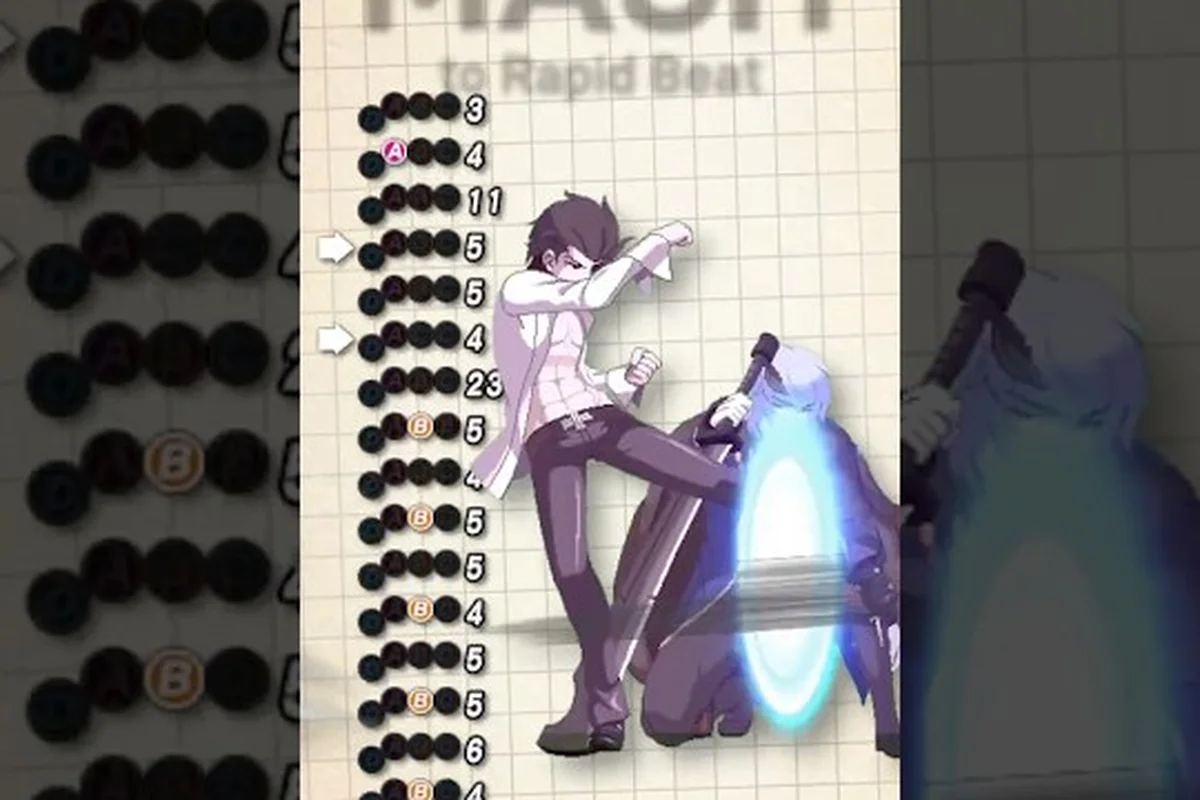
Melty Blood: Twi-Lumina tips and tricks start with one harsh truth: most rookies lose because they autopilot the same Type Lumina habits into a system that has actually moved on. The sequel swaps the Moon gauge for the Lumina gauge, layers the new Gauntlet pushback over your pressure strings, and asks you to think about Act and Duel control schemes before your first round even starts. The game launches April 22, 2027 across PS5, PS4, Switch 2, Switch, Xbox One, and Steam, so a few weeks of clean practice now will compound hard once ranked opens. According to the official Steam listing, the title ships with rollback netcode and a Kinoko Nasu-penned Grand Scenario Mode, which means your early hours should sharpen neutral and Lumina timing rather than burning out on a story you will only read once.
Why Your Type Lumina Habits Hurt You in Twi-Lumina
Twi-Lumina keeps the Rapid Beat autocombo and the general 8-way run, but it changes the resource economy underneath your fingers. Players who mained Type Lumina tend to lean on the old Moon gauge, which means they enter Twi-Lumina with a built-in delay on every super activation. Treat the Lumina gauge as a second health bar rather than a comeback button, and your combo routes immediately feel cleaner because every Lumina-art commit now has a real cost.
Gauge Spending Windows: Neutral Cash-Outs vs Round-Three Saves
The Lumina gauge fills through successful attacks, clean blocks, and well-spaced Shield use, which is why defensive players actually build meter faster than button-mashers. Spend it in neutral to convert a whiff punish into a wall carry, or hold it for a Lumina-art reversal in round three when your opponent is over-committing. The two worst habits from a Type Lumina player are burning Lumina on round-one confirms and saving it for a miracle round-three comeback against an opponent who has already adapted to your timing.
| Lumina Gauge Scenario | Recommended Spend | Why It Works |
|---|---|---|
| You won round 1 with 50% gauge | Hold for round 2 | Force opponent to respect your Lumina threat on wakeup |
| Opponent whiffs a heavy normal in neutral | Spend immediately | Convert a small whiff into a full combo that rebuilds your advantage |
| Round 3, both players under 30% HP | Save one bar for reversal | Lumina-art invuln beats mashed oki setups |
| You just got swept and are 0-2 in the set | Reset, do not spend | Play neutral to find the read, then commit your gauge to that read |
The new Rapid Beat routes are also tighter than the 2021 version, so stringing a B-chain into a C-chain now costs fewer frames while still building Lumina. If your old combo timing still feels fine, you are almost certainly dropping a cancel somewhere; check the MELTY BLOOD: TWI-LUMINA Steam page for the latest patch notes before you rewrite your BnB from memory.
Rookie Habits That Bleed Matches Before Round Two
Most new players lose not because they do not know the combos, but because they keep doing the same three things on wakeup, in neutral, and after a blocked special. These habits feel safe in training mode where the dummy never punishes, and they feel safe in casuals where a single read does not matter, but they collapse under ranked pressure. The Automaton August 2026 systems report walked through how the Gauntlet pushback specifically punishes the most common of these patterns by giving the defender a free jump-out window.
Wakeup Choices That Read as Telegraphs
The single biggest rookie tell is mashing 2A on every wakeup because the new low-profile frames on grounded opponents now leave 2A punishable on hit. Train yourself to vary wakeup between Shield, backdash, and a delayed reversal normal so that the opponent has to guess twice before getting a hard knockdown. If you always do the same option, any player with a basic frame-data reference can set up an unblockable mix on your second wakeup, and you will spend the entire match feeling like the game is reading your inputs.
| Wakeup Option | Frame Cost | Risk If Guessed Wrong | When to Use It |
|---|---|---|---|
| 2A mash | Fast startup, negative on block | Get launched into a full combo | Only after you conditioned opponent to respect low |
| Backdash | Safe spacing | Lose neutral positioning | Default option against grappler pressure |
| Shield | 1 bar, pushback on contact | Lose Lumina gauge meter | When opponent over-relies on Strike/Throw mix |
| Reversal normal | Invuln startup | Trade or get whiff-punished | When opponent keeps frametrapping on oki |
If you want a deeper breakdown of how Shield and the new Shield Counter route interact with Lumina spend, the tech list covers the frame data you will need to internalize these wakeup options properly.
Blocking High Forever
Another rookie habit is never blocking low because Type Lumina rewarded fuzzy high blocking against most of the mid-range cast. Twi-Lumina characters with strong lows like the new additions force a real mix on every knockdown, and holding up-back against a patient opponent just gives them free Lumina gauge while they chip you toward a guard crush. Drill the 2A low-block reaction in training mode for ten minutes a day and your defense rating will jump a full letter grade within a week.
The New Neutral: Running, Jumping, and Reading the Gauntlet
Neutral in Twi-Lumina plays faster than Type Lumina because the 8-way run acceleration is snappier and the air dash recovery is shorter. The new Gauntlet technique is the headline change here: a well-timed Gauntlet pushback gives the defender a free jump or dash to reset spacing, which means the attacker cannot just frame-trap a knockdown anymore. You have to actually mix the timing of your pressure strings between frame trap, empty jump, and Gauntlet bait.
Footsies Without Forgetting the Air
Veteran fighting game players tend to treat the air as a separate game, but Twi-Lumina rewards cross-up air attacks after a successful Gauntlet because the pushback puts the opponent in a bad DI. The trick is to commit to the air option only when the Gauntlet actually connects, because a whiffed Gauntlet leaves you airborne with negative frames and an opponent who already has the anti-air timing. Think of Gauntlet as a commitment: you are buying space in exchange for a moment of exposure, and that moment decides who owns neutral for the next two exchanges.
| Neutral Scenario | Best Option | Common Rookie Mistake |
|---|---|---|
| Opponent dash-block happy | Empty jump into 2B | Mashing 5C and getting whiff-punished |
| Opponent keeps low-profile | Gauntlet pushback into dash | Holding block and giving up ground |
| Opponent jumps on wakeup | 2C anti-air | Throwing a reversal and trading |
| Opponent zones with fireball | Shield then forward dash | Full jumping over the fireball into an anti-air |
For a day-one plan on how to climb the ranked ladder once you have these neutral habits locked in, the ranked guide maps out the first ten placement matches so you do not waste rating on autopilot play.
The Lumina Gauge as a Neutral Resource
Because the Lumina gauge builds through clean play rather than just getting hit, the player who controls neutral is also the player who gets to use supers. A defensive player who blocks three strike attempts in a row will have a full bar, while a mashy player who lands one random hit will still be at half gauge. Treat every clean block as a small investment, and stop thinking of Lumina as a comeback mechanic: it is a neutral reward, and the player who farms it more efficiently usually wins rounds.
Common Questions Before You Lock In a Main
Before you commit hours to one character, it helps to answer the same set of early questions every new player hits in their first session. These are the exact melty blood twi-lumina common questions that the community has been hammering out in the open beta feedback threads, and the answers below will save you a few hours of confused menu clicking.
Is Twi-Lumina a Sequel or an Update?
It is a full sequel built on the Type Lumina engine, which means the visuals, frame data, and most normals are ported, but the system mechanics, the story mode (Grand Scenario), and the cast are extended. Players coming from the 2021 release can reuse muscle memory, but they cannot reuse their matchup knowledge without labbing the new characters and the new system interactions. If you want the full Type Lumina versus Twi-Lumina comparison, the advanced guide walks through the carry-over systems and the major reworks.
Which Character Should a Brand-New Player Pick?
The honest answer is to start with whoever has the simplest neutral game and the cleanest Lumina routes, then specialize once you have ten hours of muscle memory. A shortlist of beginner-friendly traits to look for: simple bnbs, a clear gameplan at mid-screen, and at least one reversal that beats mash. The first characters to learn guide narrows this down with concrete pick-ups and the kinds of matchups you should avoid while you are still labbing your bread-and-butter combos.
How Important Is the Grand Scenario Mode?
Grand Scenario is a single-player story mode written by Kinoko Nasu that ties into Tsukihime lore, and it is the easiest way to learn how each character moves before you take them online. The scenarios do not teach you combos the way a Trials mode would, but they do teach the character-specific neutral and the situations where the developer wants you to spend Lumina gauge. Treat Grand Scenario as a guided lab session rather than a story you need to read, and your early online games will feel much less lost.
How to Drill These Habits Before Launch
With the April 2027 release still weeks away, the best thing you can do is build a short daily routine that targets the three habits above: wakeup mashing, blocking high, and forgetting the air. Twenty minutes of focused practice is more useful than two hours of button mashing because fighting games reward consistency, not volume, and the marginal return on a fourth hour is basically zero if you have not fixed the same three tells.
A 20-Minute Daily Routine
| Minute Block | Drill | What It Fixes |
|---|---|---|
| 0-5 | 2A anti-air reaction training | Stops the over-blocking-high habit |
| 5-10 | Wakeup Shield, backdash, reversal on cue | Stops the wakeup-2A-mash habit |
| 10-15 | Gauntlet pushback into dash-jump mix | Builds the new neutral language |
| 15-20 | BnB combo recording and Lumina route | Locks in a clean route for round 3 |
If you have the time, add a single ranked match after the routine to pressure-test what you just drilled, and a single casual match with a character you are about to drop so you remember why you dropped them. The community has reported that this kind of split practice routine produces faster rank movement than grinding one character for six hours straight.
What to Watch For in Your Own Replays
When you review your own replays, look for the same three things every time: how often you press 2A on wakeup, how often you block low versus high, and how often you commit to the air without a Gauntlet setup. Any one of those patterns showing up in three or more rounds means you have a habit worth drilling, and any pattern showing up in five or more rounds means you have a habit worth dropping entirely. The YouTube release date trailer from the official channel (see TYPE-MOON GAMES official trailer) shows off several of the new system interactions, which is a useful visual reference when you are trying to remember what the Lumina gauge actually looks like in motion.
Frequently Asked Questions
What is the single biggest rookie mistake in Melty Blood: Twi-Lumina?
The biggest rookie mistake is treating the Lumina gauge like the old Moon gauge and spending it the moment you confirm a hit. Lumina builds through clean play, so spending it early actually costs you the defensive tool you will need in round three. Save at least one bar for reversal or Lumina-art mix once the opponent has adapted to your pressure.
Do I need to play Type Lumina before Twi-Lumina?
No, but it helps. Type Lumina introduces the cast, the Rapid Beat autocombo, and the general neutral you will carry forward. Skipping it is fine if you are willing to lab the basics in Twi-Lumina's training mode, but playing even twenty hours of Type Lumina first will noticeably speed up your early ranked climb.
Which control scheme should I pick: Act or Duel?
Act is the recommended choice for new players because it maps every special to a single button plus direction, which removes the motion-input barrier while you are still learning neutral. Duel is the traditional 6-button layout that competitive players prefer because it gives faster access to multi-button normals. Start on Act, switch to Duel once your combos are consistent and you want faster special cancels.
How long does it take to feel comfortable in online matches?
Most players report feeling functional in ranked after about ten hours of practice and functional in their main matchup after about thirty hours. The first ten hours should be the daily routine above, the next twenty hours should be matchup-specific lab plus ranked grind, and after thirty hours you should know your character's full Lumina route. The exact timeline shifts with how many characters you are juggling and how often you review your own replays.
What is the best way to use the Lumina gauge in round three?
Round three is where Lumina spend is most decisive, so your rule of thumb should be: if you are at 30% HP or below, save the gauge for a Lumina-art reversal rather than spending it on a combo ender. The Lumina-art reversal has invuln startup that beats mashed oki setups, which is the most common situation you will face when you are about to lose. Spend the gauge to win round three outright, not to extend a combo you will probably win anyway.