
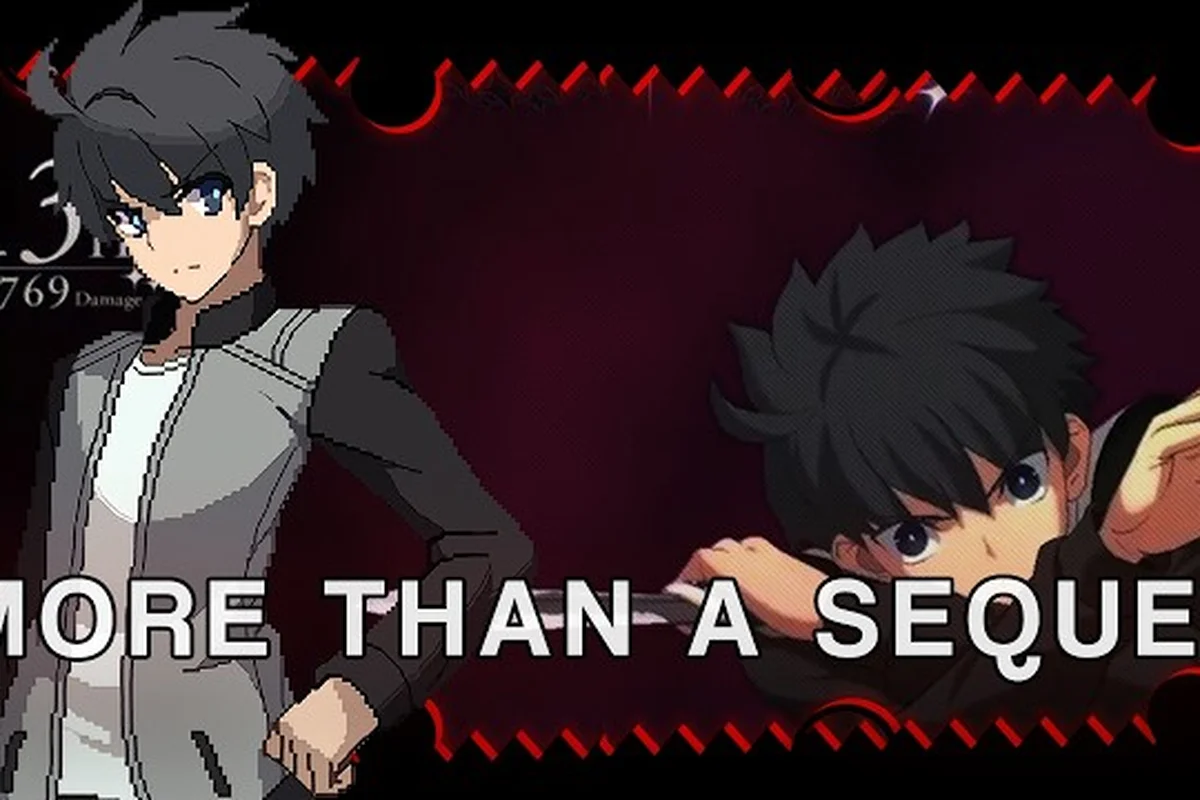
Melty Blood: Twi-Lumina is the first fighting game in the series with a main scenario written by Kinoko Nasu himself, and that single decision changes what the canon story actually means for Tsukihime fans. The dream-driven plot threads through Souya City, ties every route back to a single nightmare, and lands on an ending that reframes both vampires and Dead Apostles at once. This Melty Blood: Twi-Lumina canon story guide walks you through the dream, the routes, and what the ending actually sets up for the wider Nasuverse.
The Grand Scenario Mode: How Twi-Lumina Tells Its Story
The Twi-Lumina canon story is delivered through Grand Scenario Mode, a single-campaign structure that replaces the per-character arcade ladders of Melty Blood: Type Lumina. According to the MELTY BLOOD: TWI-LUMINA Steam store page, every fight in the main story is a scripted encounter within one continuous scenario, so the dream and the route forks happen on a shared timeline rather than on isolated character paths.
Why Grand Scenario Mode Matters for Canon
Grand Scenario Mode exists because Type Lumina's character routes could not establish a single Melty Blood: Twi-Lumina canon story without contradictions. By having Nasu script the entire scenario, the developers guarantee that every player's dream story starts and ends from the same narrative anchor, even when the route in between shifts based on which character you follow through Souya City. The mode borrows the genre language of a visual novel: the Act and Duel control schemes introduced in the August 2026 reveal let players choose between a slower, story-heavy pace and faster, fight-heavy duels, but the underlying beats stay locked.
This design also explains why community discussions around the Melty Blood: Twi-Lumina story summary tend to agree on the major beats: the dream of Souya City, the vampire surge, Len's appearance, and the final confrontation. Because the scenarios are pre-scripted, you cannot accidentally miss a critical scene by losing a fight, and the route forks are gated by character choice rather than by player skill.
| Story Element | Grand Scenario Mode (Twi-Lumina) | Character Routes (Type Lumina) |
|---|---|---|
| Writer | Kinoko Nasu | French-Bread team, multiple writers |
| Canon status | Establishes the Melty Blood: Twi-Lumina canon story | Side stories, not always canon |
| Structure | Single linear scenario with route forks | Per-character ladders |
| Dream framing | Central narrative device | Absent |
| Route selection | Character choice at scripted junctions | Automatic per roster pick |
The Dream at the Center of the Plot
The Melty Blood: Twi-Lumina dream story begins with protagonist Shiki Tohno experiencing a recurring dream of Souya City under siege. In Tsukihime canon, Souya is the city where the original vampire war played out, and the dream reframes that past catastrophe as a prophecy. Players quickly realize that the dream is not a flashback: events from the nightmare start manifesting in the waking city, blurring the line between memory and warning.
The dream device also serves a mechanical purpose. By using a shared nightmare as the narrative backbone, Nasu can route every character through the same emotional beats without forcing them into identical dialogue trees. Each fighter interprets the dream through their own lens, which is why route forks feel organic instead of bolted on.
The Souya City Setting: Where the Dream Becomes Real
Souya City is not a new location for Tsukihime readers, but in Twi-Lumina it graduates from a backstory reference to the primary stage. According to coverage of the August 2026 TYPE-MOON TIMES reveal at FGO Fes., the campaign takes place across multiple Souya districts, each tied to a specific faction of the night-world that the dream drags back into the present.
The Three Factions in Conflict
The Melty Blood: Twi-Lumina vampires and Dead Apostles collision plays out across three narrative factions, and the dream functions as the trigger that brings all three into Souya at once. Understanding these factions is essential to the Melty Blood: Twi-Lumina ending explained, because the final confrontation chooses which faction's ideology defines the new status quo.
| Faction | Representative Characters | Core Belief | Role in the Dream |
|---|---|---|---|
| True Ancestors (vampires) | Arcueid Brunestud, other vampiric figures | Vampires as custodians of humanity | The dream's original victims |
| Dead Apostles | 27 Ancestor-adjacent vampires, lower undead | Vampires as apex predators | The dream's invaders |
| The Church / Hunters | Len, Vatican-aligned agents | The night-world must be culled | The dream's reluctant mediators |
Len, voiced by Ishihara Kaori, anchors the third faction and serves as the new playable lead for the Twi-Lumina generation. Her presence in Souya signals that the Vatican has detected the dream's bleed-through, and the Church is willing to send a negotiator rather than an executioner. That choice is what allows the Melty Blood: Twi-Lumina canon story to have a diplomatic route, something Type Lumina never attempted.
How the Dream Warps Souya
Once the dream starts manifesting, the city's geography itself becomes unreliable. Districts that were dormant vampire territories in the original Tsukihime timeline start bleeding daylight undead, and older Dead Apostles who should be dormant begin waking. The Melty Blood: Twi-Lumina story summary cannot be told without acknowledging this geographic distortion, because each route is essentially a tour of which district succumbs first.
Players who want a deeper breakdown of the timeline can read the Melty Blood: Twi-Lumina Tsukihime lore explainer, which maps each Souya district to its original Tsukihime appearance and explains how the dream reactivates those locations. That context is what makes the route forks feel earned rather than arbitrary.
Reading the Melty Blood: Twi-Lumina Route Forks
Because the dream reactivates multiple Souya districts, each playable character effectively "owns" one fork of the Melty Blood: Twi-Lumina dream story. The route you follow determines which faction's perspective dominates the middle act, even though the opening and the ending are shared. Players who try to brute-force a single canonical answer usually miss the fact that the game explicitly frames the routes as complementary rather than contradictory.
How the Routes Branch
The branching happens at three scripted junctions, each tied to a dream beat rather than a random encounter. If you want the full mechanical picture of how the Act and Duel modes gate these junctions, the Melty Blood: Twi-Lumina how long is the story guide walks through each junction with timestamps. For now, the structural overview is enough to follow the Melty Blood: Twi-Lumina story spoilers safely.
| Junction | Dream Beat | Route Selection | Faction in Focus |
|---|---|---|---|
| First fork | The red moon over Souya | Pick the vampiric lead or the Church lead | True Ancestors vs. Church |
| Second fork | The drowned cathedral | Follow the Dead Apostle track or the hunter track | Dead Apostles vs. Hunters |
| Third fork | The dreaming protagonist | Side with the dream's author or the dream's witness | Nasu's metafictional layer |
Why the Routes Coexist
Nasu has been clear in adjacent interviews that multiple route truths can coexist in the Nasuverse, and Twi-Lumina inherits that philosophy. The Melty Blood: Twi-Lumina canon story is therefore best read as a "principal truth" rather than a "sole truth": the shared dream, the shared opening, and the shared ending are canonical, while the middle routes are canon-compatible variants that show how different characters would react to the same catastrophe.
This is also why Melty Blood: Twi-Lumina story spoilers often disagree online. Two players can both be accurately describing the same route, yet give incompatible summaries, because their character choice sent them through different middle acts. The dream framing is what lets Nasu keep all of those summaries truthful.
The Melty Blood: Twi-Lumina Ending Explained
The ending is where the Melty Blood: Twi-Lumina canon story finally cashes in every thread the dream set up. Without giving away every line of dialogue, the climax resolves three questions at once: what the dream actually was, who was authoring it, and what happens to the vampire-Dead Apostle balance of power after Souya stops bleeding.
What the Dream Actually Was
The dream is revealed to be a retroactive warning from a future Shiki Tohno, transmitted backward through the same mystic channels the Tsukihime remake uses for Arcueid's bloodline. That revelation reframes the entire Melty Blood: Twi-Lumina ending: every route the player walks is one possible response to a catastrophe that has not technically happened yet. The vampires and Dead Apostles you fight in Souya are echoes pulled forward by the dream, which is why they feel simultaneously anachronistic and inevitable.
This metafictional layer also explains the third fork at the dreaming protagonist junction. By choosing to side with the dream's author or its witness, the player is effectively choosing whether the warning should be obeyed literally or interpreted symbolically. Both choices lead to a stable ending, but the consequences for Souya's survivors differ.
How the Ending Reframes Vampires and Dead Apostles
The single most important thematic beat of the Melty Blood: Twi-Lumina ending explained is the collapse of the clean vampire-versus-Dead Apostle hierarchy. The dream shows that True Ancestors and Dead Apostles share an origin wound: both were created in the same primal catastrophe that first stained Souya. Once the player accepts that framing, the factions in the table above stop looking like opposing armies and start looking like rival interpretations of a shared trauma.
That thematic collapse is also the mechanical justification for the new Lumina gauge, which replaces the Moon gauge from Type Lumina. The gauge measures a fighter's proximity to the dream, not their vampiric purity, which means Dead Apostles and True Ancestors can both spike the gauge when they touch the dream's source. Players who want the mechanical breakdown of how that gauge interacts with the routes can read the Melty Blood: Twi-Lumina battle system guide, but for the lore reader, the takeaway is simple: the ending deliberately demotes bloodline as the deciding factor.
What the Ending Sets Up for the Wider Nasuverse
The ending does not close the Nasuverse door. Instead, it opens a new vector: Souya City is now a confirmed anchor point for future Tsukihime-side stories, and Len's Church faction is positioned as a recurring intermediary. That setup matters because the Tsukihime remake timeline is still in motion, and Twi-Lumina now sits inside it as the first canonical fighting-game entry written by Nasu. The Melty Blood: Twi-Lumina story summary you read today will likely be referenced by later entries, so the dream's framing gives future writers room to build on Souya without contradicting the routes already shipped.
Practical Tips for Experiencing the Canon Story
The dream is dense, and players who try to absorb the Melty Blood: Twi-Lumina canon story in a single sitting often lose the throughline. A few structural habits make the experience much smoother, and they also make the route forks easier to compare when you go back for a second playthrough.
Picking Your First Route
If you want the cleanest first impression of the Melty Blood: Twi-Lumina dream story, start with a route that keeps you close to the shared opening rather than the third fork. Characters who anchor the first or second junction expose the most canonical beats early, which gives you the context you need to appreciate the metafictional layer when you eventually hit the dreaming protagonist choice. The community commonly recommends a True Ancestor or Church-aligned lead for this reason, though any route still ends at the same canonical resolution.
Comparing Routes on a Second Playthrough
A second playthrough is essentially mandatory if you want a complete Melty Blood: Twi-Lumina story summary, because the middle acts do not cross over. The fastest way to compare routes is to keep a simple log of which Souya districts you visit and which faction's leader narrates each district. Because the dream reacts to the district order, two routes can produce different emotional beats even when they share the same ending, and a district log is the easiest way to spot those differences.
| First-Run Focus | Second-Run Focus | What You Will Learn |
|---|---|---|
| Shared opening beats | The third fork at the dreaming protagonist | The metafictional layer |
| One faction's mid-act | The opposing faction's mid-act | Why the factions are mirrors |
| Ending cutscene only | Ending plus post-credits stinger | The wider Nasuverse setup |
How Long the Experience Actually Takes
Community estimates put a single Grand Scenario Mode route at roughly the same length as a short visual novel chapter, which is longer than a Type Lumina arcade ladder but shorter than a full Tsukihime route. Players who want a more exact runtime can cross-reference the Melty Blood: Twi-Lumina main story walkthrough, which lists each junction's average length and the optional duel fights available in Act mode. Story beats beyond the confirmed premise stay unannounced, so treat the official English X account as the first stop whenever a new plot detail or character relationship is formally revealed.
Frequently Asked Questions
Is there a single Melty Blood: Twi-Lumina canon story, or are all routes canon?
There is one principal canon that consists of the shared opening, the dream framing, and the shared ending, while the middle routes are canon-compatible variants. The Melty Blood: Twi-Lumina canon story is therefore best read as a main truth with multiple valid in-fills, which matches how the wider Nasuverse handles parallel routes.
What is the Melty Blood: Twi-Lumina dream story actually about?
The dream is a backward-transmitted warning from a future version of Shiki Tohno, sent through the same mystic channels that already connect the Tsukihime remake timeline. The vampires and Dead Apostles you fight are echoes pulled forward by the dream, which is why Souya City becomes the battleground.
How does the Melty Blood: Twi-Lumina ending explained change the vampire hierarchy?
The ending reveals that True Ancestors and Dead Apostles share an origin wound from the same primal catastrophe, which demotes bloodline as the deciding factor in night-world politics. That collapse is also why the new Lumina gauge measures proximity to the dream rather than vampiric purity.
Are there Melty Blood: Twi-Lumina story spoilers I should avoid before launch?
Avoid any thread that names the third fork's two options or the identity of the dream's author, because those two beats are the ending's central twists. The opening Souya invasion, Len's introduction, and the faction table are safe to read in advance.
Do the Melty Blood: Twi-Lumina vampires and Dead Apostles ever team up?
Yes, the routes that focus on the second fork show specific True Ancestor and Dead Apostle characters working together against a common threat from the dream. Those temporary alliances are not permanent, but they do carry over into the ending's framing of the factions as rival interpretations of a shared trauma.