
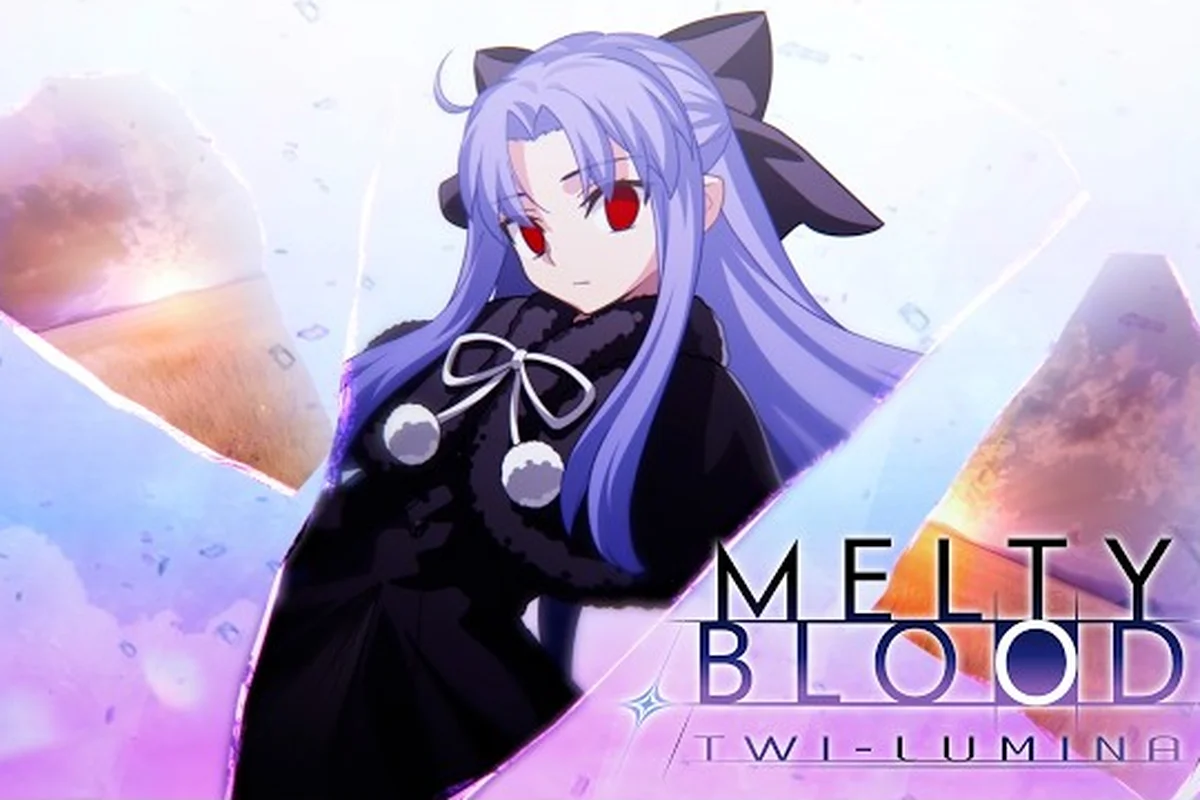
The Melty Blood: Twi-Lumina story finally pulls the franchise back into Kinoko Nasu's hands after years of side-project lore, and what has been confirmed so far points to the most narrative-driven entry in the series to date. Set in Souya City on the Tsukihime Remake timeline, the game ships a brand-new plot written by Nasu himself through a mode that fans are already calling the centerpiece of the package. Below is every verified detail, rumor, and framework you need to understand what Twi-Lumina's new story is — and is not — based on official reveals, the August 2026 press round, and community reporting tracked through September 2026.
Confirmed Story Details from Official Reveals
The clearest picture of the Melty Blood: Twi-Lumina story comes from the Aniplex Booth event held on April 22, 2027, where Nasu and French-Bread producer Toru Igarashi walked through the campaign structure. According to the TYPE-MOON Wiki's Twi-Lumina page, which tracks every confirmed beat, the new entry is built around a single, linear scenario rather than the per-character route tree that defined the original Melty Blood: Type Lumina release in 2021.
Grand Scenario Mode: Nasu's Flagship Mode
The flagship narrative feature is Grand Scenario Mode, a dedicated single-player campaign written end-to-end by Kinoko Nasu. Saiga NAK's August 2026 roundup reports that the mode ships with roughly 5-7 days' worth of recorded voice dialogue — an unusually high budget for a 2D fighting-game side story. The mode runs alongside the standard Arcade, Versus, and online modes carried over from the predecessor, but it sits at the front of the menu as the developer's intended first stop for new players.
Because Nasu is writing the plot himself rather than delegating to scenario sub-writers, the Melty Blood: Twi-Lumina new story is positioned as a direct extension of his Tsukihime continuity rather than the parody-fan-disc tone that some earlier Melty Blood entries leaned into. The campaign reportedly reframes several returning cast members around the citywide incident at the heart of the plot, giving characters who were previously background lore a proper on-screen arc.
White Len Reveal and Returning Cast
One of the bigger story surprises came on September 11, 2026, when White Len was confirmed as a playable fighter in Twi-Lumina, ending years of community speculation about whether the character would ever receive a full moveset. White Len's role in the new plot ties directly into the Souya City setting, which the TYPE-MOON Wiki's Souya page describes as the Japanese city that replaced Misaki Town as the main setting of the Tsukihime Remake series, with its name first revealed on the Melty Blood: Type Lumina website.
The returning cast list combines Tsukihime mainstays — Shiki Tohno, Arcueid Brunestud, Ciel, and Tohno Akiha — with franchise-specific additions like Hisui and Kohaku, plus the Dead Apostle antagonists who anchor the central conflict. The Melty Blood: Twi-Lumina plot uses this ensemble to stage what Nasu has called a "citywide night" in interviews, suggesting the story covers a single long evening rather than a multi-day campaign.
| Confirmed Story Element | Source / Reveal Date | Status |
|---|---|---|
| Grand Scenario Mode written by Kinoko Nasu | Aniplex Booth 2027 / April 22, 2027 | Confirmed |
| ~5-7 days of recorded voice dialogue | Saiga NAK roundup / August 2026 | Confirmed (community-tracked) |
| White Len joins roster | Official reveal / September 11, 2026 | Confirmed |
| Setting: Souya City, Tsukihime Remake timeline | TYPE-MOON Wiki / ongoing | Confirmed |
| Release date: April 22, 2027 | Aniplex Booth 2027 | Confirmed |
| Platforms: PS5, Switch 2, + predecessor platforms | Wikipedia Type Lumina page | Confirmed |
| Demo at Tokyo Game Show 2026 | Saiga NAK roundup / August 2026 | Confirmed |
The Tsukihime Connection: Why Souya City Matters
The Melty Blood: Twi-Lumina Tsukihime connection is the single most important framework for understanding the new plot, because the game is the first Melty Blood title to be built explicitly on the Tsukihime Remake continuity rather than the 2000 visual novel's original timeline. Anyone trying to parse the story needs to know which Souya they are looking at.
Tsukihime Remake Timeline vs. Original Misaki Town
The original Tsukihime visual novel and its Melty Blood spin-offs were set in Misaki Town, a fictional Japanese city. The Tsukihime Remake, which began releasing routes from 2021 onward, moved the action to Souya, a redesigned urban environment that the Souya wiki entry describes as serving as "the main setting of the Tsukihime Remake series, replacing the original's Misaki Town." Twi-Lumina is the first fighting-game tie-in built on top of the Souya setting, which is why the city gets so much attention in the marketing.
This shift matters for the Melty Blood: Twi-Lumina lore because every returning character is being repositioned within Souya's geography and social structure. Streets, schools, and the Tohno mansion all sit in Souya rather than Misaki, and several plot beats from the original Melty Blood that referenced Misaki landmarks have been quietly rewritten for the new city. Players who only know the franchise from Type Lumina will largely be unaffected, but longtime fans tracking the Melty Blood: Twi-Lumina plot against the older continuity are already noting the small retcons.
How the Plot Slots Into Tsukihime Remake
According to community reporting on the r/meltyblood subreddit's release-date trailer thread, fans expect the campaign to function as a side story set shortly after the Tsukihime Remake's main route events, which lets Nasu reference the remake's revelations without requiring players to have finished it. This is a softer integration than the direct route-split that earlier Melty Blood entries used, and it gives the new story room to introduce original antagonists without overwriting the visual novel's canon.
For a deeper side-by-side breakdown of what Souya City replaces and which Tsukihime Remake routes the Twi-Lumina timeline aligns with, the Melty Blood: Twi-Lumina Tsukihime Lore Explained companion piece walks through the geographic and chronological retcons in detail. That guide also catalogs which Shiki Tohno route the plot most closely mirrors, since the answer is not obvious from the marketing alone.
How Nasu's Writing Changes the Tone
Longtime Melty Blood players will notice a different authorial voice in the new story, because the Melty Blood: Twi-Lumina Kinoko Nasu story credit is the first time the original creator has personally led a campaign-mode scenario for the franchise in several releases. Previous entries leaned on French-Bread's in-house writers for arcade and story content, which gave the older Melty Blood titles a lighter, more referential tone.
From Parody Side-Story to Canon-Weight Drama
The most consistent note from Japanese press previews is that the new campaign plays things straight. Where older Melty Blood routes leaned into gag endings and fan-service scenarios, the Melty Blood: Twi-Lumina lore that has been previewed so far treats the cast with the same gravity Nasu applies to Tsukihime itself. Saiga NAK's preview coverage highlights several serious monologues, and the new protagonist beats reportedly pull focus away from the long-running visual-novel leads in order to spotlight characters the Tsukihime Remake only briefly mentioned.
This tonal shift is the single biggest reason the Melty Blood: Twi-Lumina lore explained angle is drawing so much attention from outside the fighting-game community. Tsukihime fans who normally skip the spin-offs are paying attention because the campaign has the same authorial weight as the mainline entries, and the Melty Blood: Twi-Lumina plot is being treated by Nasu in interviews as part of the same continuity rather than a disposable tie-in.
New Mechanics Tied to Story Beats
The new plot is not just attached to a side mode — it feeds into the fighting system itself through the Lumina gauge, the star-shaped resource displayed beneath each character's health bar. The Gauntlet technique that consumes the gauge, described in Saiga NAK's coverage, has story-mode-only flourishes during Grand Scenario cinematics, and Shiki Tohno acquires a projectile attack in Twi-Lumina that did not exist in Type Lumina, which the same coverage attributes to a plot-driven awakening scene early in the campaign.
| Story Element | Mechanical Tie-In | Why It Matters |
|---|---|---|
| Grand Scenario Mode | Standalone campaign menu | Largest single-player mode in series history |
| Lumina gauge | Star resource under health bar | Powers new Gauntlet cinematic supers |
| Shiki's projectile | New mid-range tool | Unlocks after scripted awakening scene |
| White Len recruit | Late-game roster addition | Tied to Souya City subplot |
| Souya setting | New stage art and backgrounds | Replaces every Misaki Town stage |
If you want the full mechanical breakdown of the Lumina gauge, the Gauntlet technique, and the rollback netcode carried over from the predecessor, the Melty Blood: Twi-Lumina Battle System guide covers the frame data and meter-building windows in detail. Players who only care about the campaign can skip that piece, but anyone planning to play the side modes will need the gauge system explained before they start.
Story Length, Endings, and Side Modes
The Melty Blood: Twi-Lumina story length has been one of the more confused topics in pre-release coverage, partly because the developers have framed the campaign both as a single linear scenario and as a mode with branching moments. Based on the Aniplex Booth presentation and the subsequent press previews, the campaign is structured as one main route with several optional scenes rather than a full route tree.
How Long the Main Scenario Runs
Community previews place the main scenario at roughly 8-12 hours for a first playthrough focused only on the central plot, with completionists spending 15+ hours chasing every optional scene and unlock. That puts the Melty Blood: Twi-Lumina new story in the same range as a single Tsukihime Remake route — substantially longer than the 3-4 hour arcade-mode story treatments of older Melty Blood titles but shorter than a full visual novel.
There is currently no confirmation of multiple endings in the Grand Scenario Mode, which is a notable departure from franchise tradition. Older Melty Blood entries used per-character routes and bad endings as a major replay driver, but Nasu's new campaign appears to use a single ending with optional epilogue scenes unlocked by clearing specific side conditions. For players tracking how many distinct conclusions the story has, the Melty Blood: Twi-Lumina Story Length & Endings guide lists every confirmed branch point and unlock condition as of the most recent patch.
Act Mode, Duel Mode, and Other Carries
Outside the campaign, the standard Act Mode and Duel Mode from Type Lumina return, and these side modes let players experience shorter character-driven vignettes outside the main plot. These vignettes are not written by Nasu and exist primarily as a way to practice each fighter, but they do add small lore beats for characters who do not get full arc time in the Grand Scenario.
| Mode | Story Role | Approx. Length | Writer |
|---|---|---|---|
| Grand Scenario Mode | Main campaign | 8-12 hours | Kinoko Nasu |
| Act Mode | Per-character vignettes | 30-60 min each | French-Bread staff |
| Duel Mode | Optional character scenes | Variable | French-Bread staff |
| Arcade Mode | Classic ladder | 15-30 min | French-Bread staff |
| Online Versus | None (purely PvP) | N/A | N/A |
What We Still Don't Know About the Twi-Lumina Story
Even with the Aniplex Booth presentation, the August press round, and the September 2026 White Len reveal, several major questions about the Melty Blood: Twi-Lumina lore remain open. The developers have been deliberate about not spoiling the campaign's midpoint or antagonist roster, which means the pre-release picture is still incomplete.
Open Questions as of September 2026
The biggest unresolved question is the identity of the primary antagonist. The marketing has hinted at a Dead Apostle threat without naming the specific vampire, and Saiga NAK's coverage notes that several "background" Tsukihime characters are getting unexpectedly large roles in the new plot, which strongly suggests the antagonist is a figure from Nasu's older written work rather than a brand-new creation.
A second open question is how the Melty Blood: Twi-Lumina lore will handle the Tsukihime Remake's route structure. Because the Remake is still rolling out routes, Twi-Lumina has to be careful not to contradict a route that has not been released yet, and the developers have hinted that the campaign is set in a soft continuity that does not require players to have seen any specific Remake route.
Third, the demo at Tokyo Game Show 2026 reportedly only showcases the Lumina gauge and Gauntlet systems, not the campaign's opening cinematic, which means the story's actual opening scene has not been shown publicly. For players planning to go in blind, the lack of pre-release footage is good news.
| Open Question | Why It Matters | Likely Answer Window |
|---|---|---|
| Primary antagonist identity | Drives entire second half of campaign | Pre-release trailer, late 2026 |
| Route alignment with Tsukihime Remake | Affects canon status | TGS 2026 demo / launch |
| Length of the final act | Determines total campaign length | Pre-launch preview event |
| Post-launch story DLC | Possible expansion | Post-launch roadmap |
| Returning character cameos | Long-fan-requested screen time | To be revealed |
Players planning to start the campaign the moment it launches will want a quick orientation to the basic systems so they can focus on the story rather than the fighting-game mechanics. The Melty Blood: Twi-Lumina Walkthrough entry covers the early-game menus, the first fight, and how to access Grand Scenario Mode without having to grind through the older Type Lumina content.
Frequently Asked Questions
Who is writing the Melty Blood: Twi-Lumina story?
Kinoko Nasu is writing the Grand Scenario Mode personally, marking the first time the original Tsukihime creator has led a Melty Blood campaign in several releases. French-Bread's in-house staff still writes the Act, Duel, and Arcade modes carried over from the predecessor.
What timeline does the Twi-Lumina story follow?
The Melty Blood: Twi-Lumina Tsukihime connection is built on the Tsukihime Remake timeline, which is set in Souya City rather than the original Misaki Town from the 2000 visual novel. The campaign functions as a side story set shortly after the Remake's main route events, so players do not need to have finished the Remake to follow the plot.
How long is the Twi-Lumina story?
Community previews place the Grand Scenario Mode at roughly 8-12 hours for a first playthrough focused on the main plot, with completionist runs reaching 15+ hours. There is currently no confirmation of multiple endings, though optional epilogue scenes are unlocked by completing specific side conditions in the side modes.
Where is Twi-Lumina set, and why does the city matter?
The setting is Souya City, a redesigned Japanese city that replaced Misaki Town as the main setting of the Tsukihime Remake series. The city matters because the campaign's "citywide night" framing treats Souya's geography, schools, and the Tohno mansion as the structural backdrop for the entire plot, which is a first for a Melty Blood fighting game.
Will the new story fix gaps from the older Melty Blood lore?
Several of the characters who were only mentioned in earlier side material are getting on-screen arc time in the new campaign, according to community reaction threads on r/meltyblood. The Melty Blood: Twi-Lumina lore explained through the Grand Scenario is being framed by Nasu as filling in those background-character gaps rather than rewriting the older continuity.