
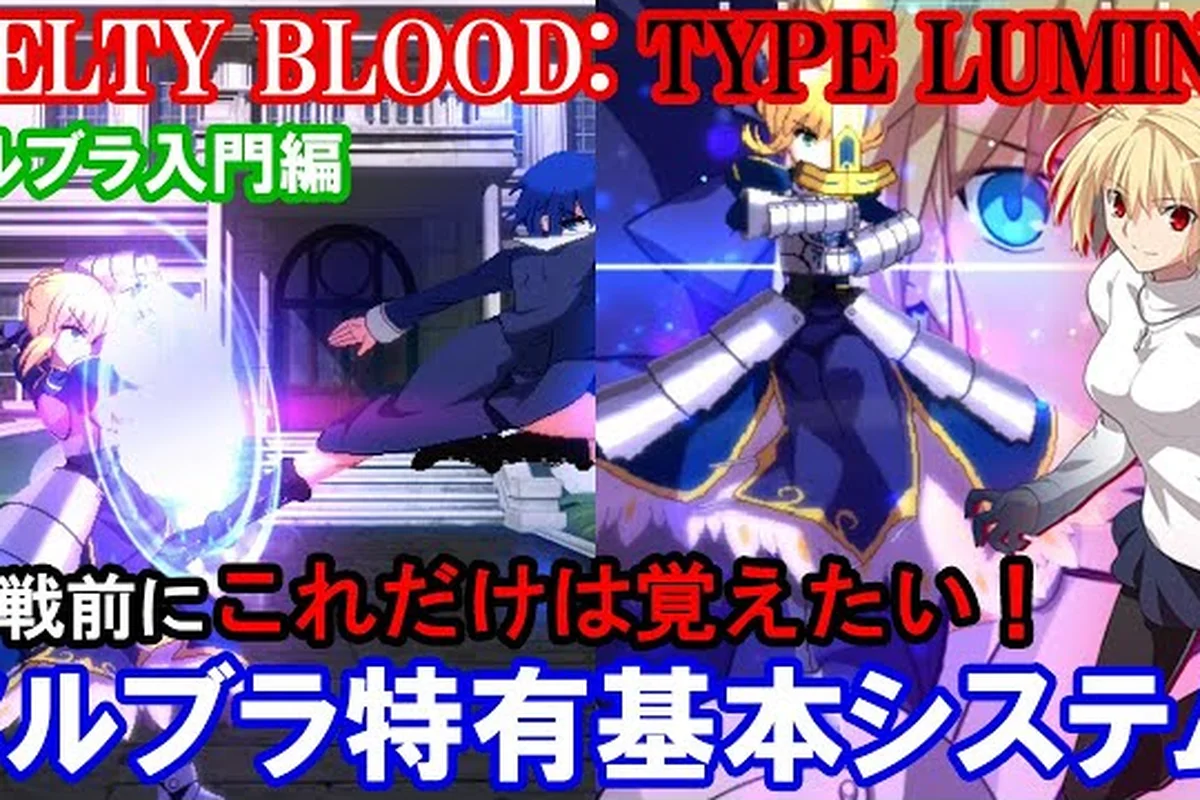
Picking between Melty Blood: Twi-Lumina Act vs Duel decides how every fight in your first 50 hours will feel, because the two control schemes feed the same combat engine through very different input layers. With the title launching April 22, 2027 across PS5, PS4, Switch 2, Switch, Xbox One, and Steam, and with rollback netcode plus crossplay confirmed for online PvP, the choice now shapes whether your early matches feel forgiving or competitive from the first round.
What Act and Duel Actually Mean in Twi-Lumina
Act and Duel are the two flagship control schemes French-Bread and TYPE-MOON shipped as the headline systems for Twi-Lumina, revealed in detail during the FGO Fes. 2026 TYPE-MOON TIMES livestream. Both run on top of the same battle engine and both feed into the new Lumina Gauge that replaces the old Moon gauge from Melty Blood: Type Lumina, but the input feel and the target audience are completely different.
The Two-Mode Control Philosophy
Act Mode is the streamlined, narrative-friendly input layer. It trims motion inputs down to single button presses for special moves, leans on auto-combo routing through the enhanced Rapid Beat system, and lets new players reach satisfying strings without drilling quarter-circle or charge motions. According to the August 2026 Automaton systems report, Act Mode is positioned for players who want to focus on reading opponents and the Grand Scenario story Kinoko Nasu wrote for Souya City rather than memorizing shoryuken-style motions.
Duel Mode is the classic, motion-input layer that veterans of Type Lumina and the earlier Actress Again and Current Code entries already know. Quarter-circles, dragon-punch motions, charge commands, and the full motion library return, which means every special, super, and the new B+C Gauntlet technique that blows opponents away must be entered the traditional way. Duel Mode feeds the same combo routes and Lumina spenders as Act, but it gives the player total manual control over timing and cancel windows.
| Element | Act Mode | Duel Mode |
|---|---|---|
| Special move input | Single button (one-button specials) | Motion inputs (236, 623, charge, etc.) |
| Combo routing | Auto-combo via Rapid Beat | Fully manual, player-driven |
| Target audience | Story-first players, new Fighting game audience | Veterans, ranked grinders, tournament players |
| Lumina Gauge access | Same Lumina Gauge economy | Same Lumina Gauge economy |
| Parry / Shield | Same shield mechanic, same parry timing | Same shield mechanic, same parry timing |
| Practice Mode utility | Lower for labbing frame data | Higher for frame-perfect setups |
The mode you pick is not a permanent choice. Both Act and Duel are toggled in Training Mode and even mid-session in some menus, so you can switch back and forth while learning. The decision is really about which input layer feels best as your default.
How Each Mode Changes Combo Routing and the Lumina Gauge
Because the Lumina Gauge is the new resource engine that powers Enhanced State, the B+C Gauntlet, and the upper-tier spenders that replaced Moon Drive, both modes have to translate the same gauge into the same damage. The difference is in how you feed the gauge and how the combo engine strings hits together.
Rapid Beat and the New Combo Engine
Twi-Lumina's Rapid Beat system is no longer a strict three-hit autocombo like in Type Lumina. It now extends with proper gatling routes, can chain into specials, and scales with the Shield Counter cancel windows. In Act Mode, Rapid Beat does the heavy lifting — you tap the auto-combo button, the character routes through the standard string, and the system handles the cancel timing into your special. In Duel Mode, the player chooses each link, which means higher damage ceilings, but also more drop points where the combo fails if a link is mistimed.
This has real consequences for Air Hit Decay, because Act Mode's auto-routing applies a more conservative decay ceiling, while a Duel Mode player who lands a clean manual route can keep scaling higher through the same wall carry. The Twi-Lumina controls breakdown covers how each input layer maps to the underlying combo data, but the short version is: Act trades optimal damage for execution safety, Duel trades execution safety for optimal damage.
Gauge Building, Shield Bounces, and Counter Hits
Stun routes and counter-hit confirms are a hidden equalizer between the two modes. Because Stun and Counter Hit bonuses apply the same bonus damage in both modes, a Duel Mode player who lands a clean CH confirm into Lumina spender does not necessarily out-damage an Act Mode player who built the gauge from Rapid Beat pressure and converted with a single-button Gauntlet. According to community testing during the FGO Fes. demo build, both modes could reach roughly comparable meterless damage in the 2.4K to 2.6K band on the same character, with Duel edging slightly ahead in optimization potential at the cost of execution.
Online PvP and Rollback Netcode: What Both Modes Share
The online layer sits above the Act vs Duel choice, which is important: the input scheme you pick does not change the rollback netcode quality or the crossplay support that Twi-Lumina ships with. Both modes plug into the same network layer, so the network experience is identical between Act and Duel players.
GGPO-Style Rollback and Input Delay Targets
Twi-Lumina ships with GGPO-style rollback netcode as a headline feature, confirmed on the MELTY BLOOD: TWI-LUMINA Steam store page and corroborated by the Wikipedia entry for its predecessor Melty Blood: Type Lumina, which first introduced rollback to the series in 2021. The same input-delay reduction techniques and re-simulation layers apply whether you are playing in Act or Duel, so input lag from netcode is the same for both. According to the developer commentary at the TYPE-MOON TIMES stream, the target online experience is under four frames of rollback on a clean connection, which matches the quality bar Type Lumina set.
Ranked matchmaking and Casual Player Match both use the same queue and the same cross platform play rules. You will face PlayStation players on the PC build and Xbox players on the Switch 2 build without a separate lobby. For a deeper look at the online systems, the Twi-Lumina story and modes hub walks through how the modes layer into the online ecosystem alongside Grand Scenario.
| Online Feature | Status at Launch | Notes |
|---|---|---|
| Rollback netcode | Confirmed | GGPO-derived, same as Type Lumina baseline |
| Cross platform play | Confirmed | All six launch platforms in one matchmaking pool |
| Ranked mode | Confirmed | Rank tiers and ladder carry over from Type Lumina structure |
| Player Match lobbies | Confirmed | Host-migrated, rollback-backed |
| Replay system | Confirmed | Auto-saves Ranked replays for review |
Picking Your First Mode: A Solo vs Competitive Decision
The Act vs Duel decision boils down to one question: do you want the lowest barrier to enjoying the Souya City Grand Scenario and Story Mode, or do you want the highest possible ceiling for ranked grind and tournament play? Both are valid, and both modes are fully featured, but the experience timeline diverges quickly.
When Act Mode Is the Right Pick
Pick Act Mode if any of the following describe you: you are a complete newcomer to 2D fighters, you primarily care about the Kinoko Nasu-written story and Grand Scenario, you play on a controller and do not want to drill motions, or you want to learn the new Lumina Gauge and Gauntlet system before adding execution pressure on top. Act Mode also wins if you are introducing the game to a friend who only plays casually — the one-button specials let both of you spend the same Lumina Gauge the same way, and the Rapid Beat autocombo keeps long strings honest even when one player drops inputs.
The story-first arc in particular benefits from Act Mode. Grand Scenario routes players through Souya City chapter by chapter with a Kinoko Nasu script that puts weight on the new character Len, voiced by Ishihara Kaori, and several returning Type Lumina cast members. Players who would rather absorb that narrative than grind 236 motion drills will get a much smoother first playthrough in Act.
When Duel Mode Is the Right Pick
Pick Duel Mode if you played Type Lumina seriously, if you already have muscle memory for quarter-circle and dragon-punch motions, or if your goal from day one is to climb the ranked ladder and prep for tournament play. Duel Mode also wins for labbing: in Training Mode, you need motion inputs to test the new Shield, Parry, and Counter Hit routes against a CPU dummy, because the practice partner cannot simulate the decision points Act Mode skips for you.
A short, practical comparison helps here. If you are weighing time investment, the table below shows roughly how long it takes a beginner to reach competent play in each mode, based on community experience reports from the FGO Fes. demo build.
| Skill Goal | Act Mode Time Estimate | Duel Mode Time Estimate |
|---|---|---|
| First clean combo of 5+ hits | 1 to 2 hours | 6 to 10 hours |
| Consistent Lumina spender confirm | 3 to 5 hours | 12 to 20 hours |
| Reaching floor 8 of Ranked | 15 to 25 hours | 30 to 50 hours |
| Tournament-ready optimization | 80+ hours (ceiling limited) | 150+ hours (ceiling open) |
The numbers are not exact, but they line up with the pattern fighting game communities have seen in every crossover control-scheme title from Fantasy Strike to Granblue Fantasy Versus: Act compresses the early game, Duel preserves the long-term ceiling. Your real question is whether the long-term ceiling matters to you. Players who clear the Act-versus-Duel dilemma usually settle it in training first, and the Steam community beginner character thread shows how predecessor players paired each scheme with starter-friendly rosters.
Frequently Asked Questions
Does Act Mode lock me out of any character or combo?
No. Every character in the Twi-Lumina roster, including returning Type Lumina cast members and new fighters like Len, is fully playable in both Act and Duel. The combo ceiling is slightly lower in Act because the auto-combo routing applies more conservative Air Hit Decay scaling, but no character is restricted and no Lumina spender is hidden behind a Duel-only flag.
Can I switch between Act and Duel mid-session without restarting?
Yes. Both modes are toggled in Training Mode and from the character-select menu before each match. The switch takes effect immediately and does not require restarting the game or losing ranked progress, so you can practice one mode and play another without friction.
Is rollback netcode the same quality in both modes?
Yes. Rollback netcode sits below the input layer, so the network experience is identical regardless of whether you use one-button specials or full motion inputs. Both modes use the same GGPO-derived system with the same target of under four frames of rollback on a clean connection, and both modes share the same cross platform play matchmaking pool across all six launch platforms.
Does crossplay work between Act and Duel players in the same lobby?
Yes. Crossplay in Twi-Lumina matches any player on any of the six launch platforms (PS5, PS4, Switch 2, Switch, Xbox One, Steam) regardless of input scheme, so an Act Mode player on PS5 can face a Duel Mode player on Steam in the same ranked match. The ranked ladder also treats both modes equally for placement and rating, so you are not penalized for using Act.