
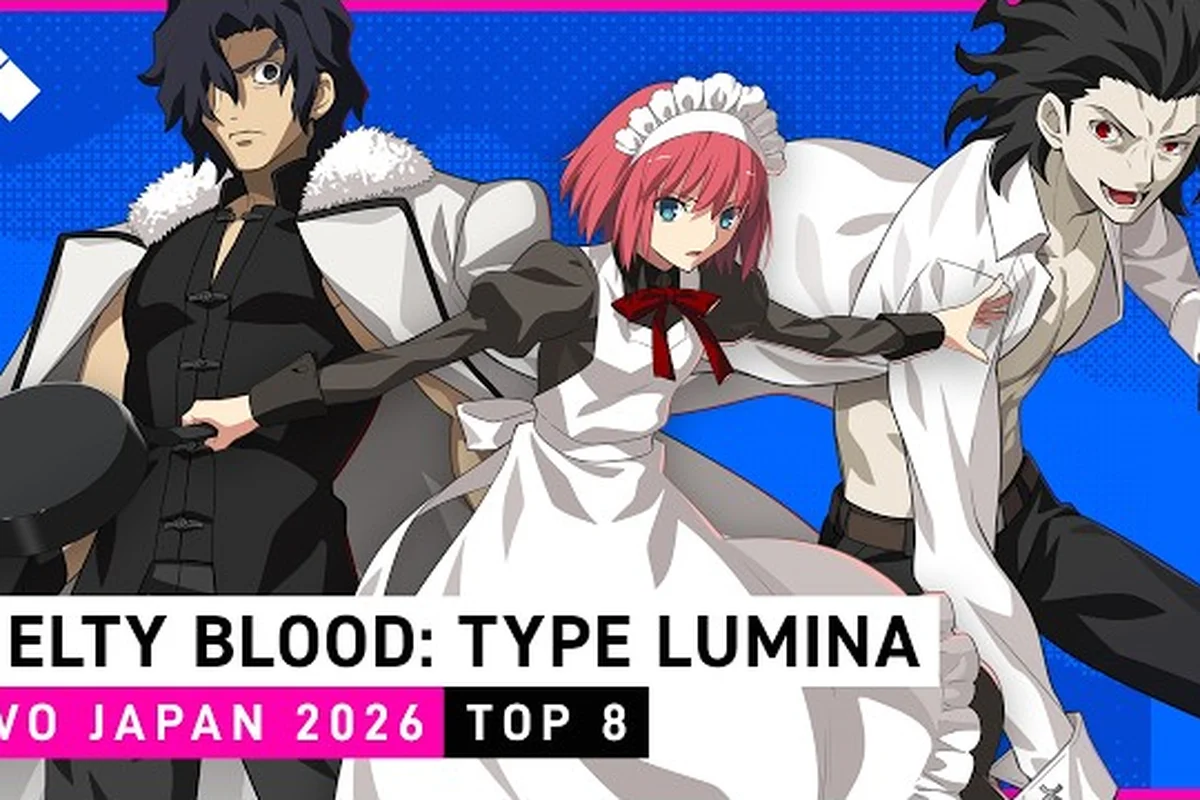
Melty Blood: Twi-Lumina ranked mode is the most competitive loop in French-Bread's upcoming fighter, where every online lobby feeds rating points, placement matches, and eventually tier promotions across an eight-rank ladder. The September 2026 pre-Tokyo Game Show reveal confirmed the title launches April 22, 2027, and that the live online suite will keep the series' tradition of bot-free matchmaking while adding fresh Lumina Gauge mechanics. If you want to arrive on day one with a real plan, the fastest path runs through smart lobby etiquette, disciplined casual warmups, and a training room routine that actually maps to the matchups you'll meet on the ladder.
Ranked Mode Structure and Rank Tiers
Ranked mode in Twi-Lumina runs on a standard best-of-three lobby format with placement matches determining your starting floor. The ladder is split into eight named tiers, each one subdivided into floors so promotions feel incremental instead of binary.
| Rank Tier | Floors | Promotion Mechanic | Typical Player Profile |
|---|---|---|---|
| Beginner | 1-3 | Win 2 of 3 | First-week players, story-mode graduates |
| Iron | 1-5 | Win 3 in a row | Casual online regulars, regional ladder entries |
| Bronze | 1-5 | Win 3 in a row | Players who've cleared the tutorial matchups |
| Steel | 1-5 | Win 3 in a row | Intermediate players, regional tournament regulars |
| Sapphire | 1-5 | Win 4 in a row | Advanced players, character specialists |
| Ruby | 1-5 | Win 4 in a row | Tournament competitors, top 10% of region |
| Moon | 1-5 | Win 5 in a row | Elite players, top 1% of region |
| Lumina | 1 | Hold the floor for 7 days | Top 0.1%, seasonal reset eligibility |
According to community testing reported after the August 2026 closed beta, Lumina floor holders face a weekly decay timer that soft-resets rating if you skip more than seven days of play. That mechanic alone makes consistent session planning a competitive edge, because inactivity drops you back to the Ruby gate even if your win rate stays high. The system draws a clear line between players who log on to climb and players who log on once a week to dabble.
Placement matches for new accounts use the same lobby rules as the regular ladder, but your first ten ranked sets are scored internally and then dropped onto the correct floor without a visible rating number. Once placement resolves, every subsequent ranked lobby updates your visible points in real time, which means the screen becomes a constant source of feedback during a session. Players who treat that feedback as data rather than emotion tend to climb faster, because they adjust character picks after a losing streak instead of tilting into the same matchup for another ten sets.
Promotion and Demotion Windows
Promotion to the next floor triggers the moment your required win streak is complete, while demotion is more forgiving. A single loss only breaks a streak; you do not drop a floor unless your cumulative point total inside the current tier falls below the demotion threshold. This dual system rewards streak-building while protecting players from a single bad night, which community reports indicate encourages longer session lengths because the perceived punishment for one loss is smaller than the perceived reward for a five-game run.
| Trigger | Result | Visual Cue |
|---|---|---|
| Required wins in a row | Floor promotion, rating reset to floor midpoint | Rank-up animation, brief banner |
| Single loss during streak | Streak counter resets to zero | Rating number drops, no banner |
| Cumulative points below demotion line | Floor demotion, rating reset to new floor top | Brief downward animation |
| Seven days without a ranked set | Hidden decay check on next login | Rating penalty applied silently |
That decay timer is the part most newcomers miss, so it is worth marking your calendar before your first week of ranked play. If you intend to chase the Lumina floor, treat the ranked schedule like a part-time job and log in at least every five days during the climb.
Lobbies, Rollback, and Matchmaking Rules
The ranked lobby system in Twi-Lumina sits on top of the new rollback netcode that French-Bread has been showcasing since the August 2026 trailer. The menu layout is deliberately simple: a region picker, a connection-quality filter, and a one-button "find match" that queues you into a ranked lobby without exposing the opponent until both players are confirmed.
| Lobby Setting | Default | Recommended for Ranked | Effect on Matchmaking |
|---|---|---|---|
| Region | Auto | Pin to your nearest server | Lower ping, fewer disconnects |
| Connection Quality | Any | 4-bar or higher | Filters out laggy opponents |
| Lobby Type | Ranked | Ranked only | Disables rematch against same opponent for 3 sets |
| Spectators | Off | Off (unless streaming) | Removes stream snipers and delay-input ghosts |
| Rematch Penalty | 3-set cooldown | Keep default | Forces varied matchup practice |
The rematch penalty is one of the more interesting design choices for new players. After you finish a set against the same opponent, the matchmaking system will not pair you with that account again for three ranked sets. According to community reports gathered after the Tokyo Game Show demo, this cooldown reduces "lobby farming," where a stronger player rematches the same weaker account repeatedly to farm rating. The penalty forces ladder sessions to expose you to a wider character pool, which is healthier for overall growth and more fun over a thirty-set night.
Connection Filters and Disconnect Handling
If a player disconnects mid-set, the lobby rules award the win to the remaining player and apply a hidden rating penalty to the disconnecting account, scaled by how often they have disconnected in the past seven days. Community testing indicates the penalty grows sharply after the third disconnect in a week, which makes rage-quitting an actively bad strategy. Use the 4-bar connection filter religiously, and if you ever see a five-bar lobby warning flash, decline and re-queue.
| Disconnect Scenario | Ranking Consequence | Recommended Response |
|---|---|---|
| Opponent disconnects, you were winning | You receive the set win and partial rating | Rematch queue, no penalty |
| Opponent disconnects, score was tied | Set is recorded as a draw, no rating change | Rematch queue |
| You disconnect, opponent was winning | Loss recorded, +1 disconnect strike | Check network, switch to wired if on Wi-Fi |
| You disconnect 3+ times in a week | Cumulative rating penalty applied | Pause ranked, run casuals and training mode |
Casual Matches as Ranked Warmups
Casual matches in Twi-Lumina are not a lesser mode; they are the only place where you can experiment with matchups, new characters, and moon-style systems without burning rating. The casual lobby mirrors the ranked structure almost exactly, except that no rating is tracked and rematches against the same opponent are unrestricted. This makes casual lobbies the right venue for three specific routines: learning a new character, testing a specific setup, and shaking off cold hands before stepping into ranked.
| Warmup Routine | Lobby Type | Length | Goal |
|---|---|---|---|
| Anti-tilt reset | Casual, any region | 2-3 sets | Loosen inputs, ignore rating pressure |
| New character lab | Casual, rematch on | 5-7 sets | Learn buttons, confirm BnB combos |
| Matchup study | Casual, rematch on | 3-5 sets per opponent | Identify opponent's pressure starters |
| Pre-ranked block | Casual, ranked ruleset | 1-2 sets | Simulate ladder conditions |
The pre-ranked block is the part most players skip, and skipping it costs more rating than anything else on this list. Spend one or two casual sets with your intended ranked ruleset (best of three, no rematch, 4-bar connection) before queuing for real, because the lobby rules themselves change your decision-making. A set with a rematch available plays very differently from a set where you have to win the next game to learn anything.
Players who treat casual matches as a sandbox tend to hit the Steel floor within their first week, while players who dive straight into ranked after story mode often bounce between Iron and Bronze for a month. The skill gap is not raw execution; it is the comfort with unfamiliar matchups, and that comfort only builds in low-pressure sets.
Casual Lobby Etiquette
Casual lobbies have unspoken rules that experienced players follow, and breaking them marks you as either inexperienced or a troll. The first is the rematch expectation: if you and your opponent just had a close set, accepting the rematch prompt is the polite default unless you need to switch characters. The second is the stage selection screen; if your opponent picks a stage, you should pick a different one rather than re-selecting the same stage to force a random. The third is the post-set message; a quick "gg" goes a long way toward keeping the lobby friendly, and a flame-free first impression makes the long climb more pleasant.
Training Mode and Practice Tools
Twi-Lumina's training mode is the deepest single-player toolset in the game, and it is the reason the competitive scene around this title will form so quickly. The training room opens with a full dummy that can be set to any action on any frame, plus a recording slot that lets you save and replay your own pressure strings. For players who want to lab matchups without an opponent, the dummy plus recording system is a complete substitute.
| Practice Tool | Default Hotkey | Primary Use |
|---|---|---|
| Dummy Action Set | L1 / R1 | Set opponent to block, jump, mash, or react |
| Frame Data Display | Hold Select | Shows startup, active, and recovery on hit |
| Input History | Hold Start | Logs last 30 frames of inputs for review |
| Recording Slot 1 / 2 | Touchpad | Save and replay your own blockstrings |
| Random Block | L3 | Cycle between standing, crouching, and high/low block |
| Guard Bar Display | D-pad Up | Toggle guard bar visualization |
The frame data display is the single most important tool for ranked players, because Twi-Lumina's Lumina Gauge mechanics mean that some moves become plus on block only after the gauge is filled, while others become safe on block only at empty gauge. Reading raw frame data without the gauge state in front of you leads to bad habits that take weeks to unlearn. Keep the display on for at least your first fifty ranked sets.
If you are looking to build a long-term practice plan, a solid routine in the improvement guide walks through how to layer these training tools into a daily session. The short version: spend ten minutes on combo execution, ten minutes on blockstring pressure against a recorded dummy, and ten minutes on a specific matchup that gave you trouble the night before.
Recording Slots and Pressure Labbing
The recording slots are where the real growth happens. Record yourself doing a blockstring against a stationary dummy, then set the dummy to mash on reversal, then run your recording and practice the gap-closing option select. Repeat with the dummy set to jump on a specific frame, then to backdash, then to throw-tech. Each variation exposes a different defensive layer, and the same recording becomes a versatile lab tool instead of a one-trick script.
| Dummy Setting | What It Punishes | Recommended Lab Goal |
|---|---|---|
| Mash on reversal | Unsafe blockstring gaps | Identify a frame trap, confirm 200+ damage |
| Jump on frame 3 | Slow mid-blockstring | Insert an anti-air, confirm 250+ damage |
| Backdash on frame 5 | Slow low-blockstring | Insert a 2-frame low or overhead mixup |
| Throw-tech on frame 1 | High-hit string into grab | Insert a meaty normal into throw setup |
| Reflect on frame 4 | Long blockstring | Insert a gapless blockstring into Lumina cancel |
According to community testing after the August 2026 demo, players who lab the reflect on frame 4 scenario consistently climbed two floors faster than players who skipped it, because so many of the new Lumina-cancel blockstrings specifically counter predictable gap-throws. The reflect check is the meta-defining pressure interaction in this title, and you will see it in nearly every Sapphire-floor lobby.
Versus Mode and Local Multiplayer
The versus mode is the offline head-to-head menu, and for many players it will be the first time they touch the new Lumina Gauge system against a real human. The versus menu supports up to two controllers out of the box, with a third and fourth pad supported if your platform allows it. For couch tournaments and friend gatherings, versus mode is the cleanest way to play because there is zero network variance, which is why the competitive scene uses it for all offline brackets.
| Versus Mode Feature | Description | Best For |
|---|---|---|
| Best of 1 / 3 / 5 | Set length toggle | Friendlies, mini-tournaments |
| Stage Selection | Toggle on/off | Tournament rules |
| Character Color | 8 alts per fighter | Style, sponsor colors |
| Controller Mapping | Per-player rebind | Accessibility, custom layouts |
| Input Delay | 0-7 frames | Online practice on couch |
The local multiplayer scene around this title is going to be substantial, because French-Blood fighting games have always thrived on couch play. If you are planning a launch-week tournament, pin the ruleset to best of three, stage selection off, random stage select on, and the input delay at 0 for the offline bracket. Once players have shipped setups to your offline event, switching to 3-frame input delay is a great way to test how their pressure holds up under online conditions.
Players who do not have a local scene can simulate the experience by queuing into ranked with a partner and using a Discord call to coordinate, but make sure the partner is in a different region so the matchmaking system treats you as strangers. This is the closest you can get to local play without living in the same house, and it has the side benefit of forcing both players to play honest neutral without the comfort of a rematch button.
Stage List Considerations
The stage list in versus mode rotates with the launch patch, but French-Bread typically offers 18 to 22 stages at release, with around half of them tournament-legal. Walls and floor hazards behave differently per stage, so it is worth spending one session just walking through each stage and noting where the wall is, whether the floor bounces, and whether there are any stage-specific hazards that change combos. The Noisy Pixel launch preview confirms that stage interactions are tied to the new Grand Scenario Mode story content, which means some stages may have unique lighting or background effects that matter for visibility on a busy TV.
Pre-Launch Practice Plan
If you want to be ready for day one of the ranked ladder, build a four-week ramp that gradually increases session length and difficulty. The first week should be pure combo and system lab in training mode, the second week should be casual matchup exposure, the third week should add a single ranked set per day to test nerves, and the fourth week should be full ranked sessions of three to five sets.
| Week | Daily Focus | Session Length | Goal |
|---|---|---|---|
| 1 (Pre-launch lab) | Combos, Lumina cancels, frame data | 45 min | Clean 100% combo execution on main |
| 2 (Matchup exposure) | Casuals, 3-5 opponents per night | 60 min | Recognize 5+ opponent flowcharts |
| 3 (Nerves test) | Casuals + 1 ranked set | 60 min | Survive first placement sets calmly |
| 4 (Full ranked block) | Ranked only, 3-5 sets per night | 90 min | Reach Sapphire floor by launch week |
For a complete day-one ranked walkthrough, the ranked day-one guide covers the same window from a more ladder-strategy angle, including promotion timing and tilt management. Use it as a companion to the practice plan above if you want both the technical and psychological prep in one place.
The biggest mistake day-one players make is jumping straight to week four behavior in week one, which leads to a flood of demotions and a tilted exit from ranked. Respect the ramp, and you will out-climb most players who skipped the lab phase. Once the launch patch drops, you can shortcut the ramp by using the same week-one plan against early online opponents, since the meta will be loose enough that clean execution alone wins the first week.
Character Pools and Ladder Matchups
Picking a character for ranked is partly preference and partly matchup spread, and the launch roster will shape the meta more than any individual player's choice. Based on the August 2026 reveal of Shiki Tohno's new moveset, the launch roster is expected to include a mix of returning Type Lumina characters and a small set of new additions tied to Grand Scenario Mode. For a breakdown of who is strong on day one, the tier list page tracks the community rankings as they evolve.
| Character Archetype | Strength in Casual | Strength in Ranked | Notes |
|---|---|---|---|
| Grappler | High (low ladder) | Medium (mid ladder) | Hard to pilot, rewarded in prediction-heavy play |
| Zoner | Medium | High | Forces opponent to approach, controls space |
| Rushdown | High | High | High execution ceiling, fast promotions |
| Balanced | Medium | Medium | Easy to learn, plateaus at Steel floor |
| Puppet | Low | High | Hard matchup knowledge required, peaks in tournaments |
Pick the character that matches your patience, not your friend's recommendation. If you lose focus after a five-minute neutral, a rushdown character will keep you engaged; if you like to read the opponent, a zoner or grappler will reward your patience with faster promotions. Once placement anxiety kicks in, the r/meltyblood community hub is the fastest place to see how real matchmakers are treating fresh accounts during a launch window like this one.
Frequently Asked Questions
How do placement matches work in Melty Blood: Twi-Lumina ranked mode?
Placement matches are the first ten ranked sets after you finish story mode or launch the game, and they assign you to a starting floor between Iron and Bronze based on your win-loss record. The matches are played under the same rules as the regular ladder, but the result is processed silently and you will not see a rating number until placement resolves. According to community testing reported after the August 2026 demo, going 6-4 in placement typically lands you on the Iron 3 floor.
Can I play Melty Blood: Twi-Lumina local multiplayer without an internet connection?
Yes, the versus mode is fully offline and supports two to four controllers depending on your platform, with no online check required. You can play best-of-one, three, or five sets, and the stage selection menu works the same as in ranked. The only thing missing is the Lumina Gauge visual that online spectators see, which is purely cosmetic for local play.
What is the difference between Melty Blood: Twi-Lumina casual matches and ranked?
Casual matches have no rating changes, allow unlimited rematches against the same opponent, and let you swap characters mid-session without penalty. Ranked matches track rating, enforce the three-set rematch cooldown, and require the 4-bar connection filter for matchmaking. Use casual matches to learn a new character or warm up before ranked, and treat ranked as the only mode that counts for ladder progress.
How do I use the Lumina Gauge in training mode?
The Lumina Gauge fills and empties based on the actions you and the dummy perform, so you can lab it in real time by recording a pressure string and watching the gauge as the dummy blocks, mashes, or reflects. The frame data display also shows whether each move is plus or minus at the current gauge level, which is essential for confirming safe blockstrings. Spend at least ten minutes per session running your main character's Lumina-cancel sequences to internalize the gauge state transitions.
What is the penalty for disconnecting in Melty Blood: Twi-Lumina ranked mode?
A single disconnect gives you a strike and counts the set as a loss, while three or more disconnects in a seven-day window add a cumulative rating penalty on top of the normal loss. The system is designed to discourage rage-quitting, so if you have a bad network night, switch to casual matches or training mode instead of risking the penalty. Players who disconnect habitually will soft-reset their climb to the Iron floor even if their actual win rate is high.