
Solid Melty Blood: Twi-Lumina frame traps are not magic — they are a small piece of math. You take a move that leaves you plus on block, choose a follow-up that connects before your opponent's fastest button can start up, and then count the gap so a mash, a jump, or a reversal will eat a hit. The full move properties list, including frame data, hitbox sizes, and damage values, is the raw material you need to convert pressure strings into guaranteed traps, and the same character data sheets tell you when your own high-low mix becomes truly ambiguous.
If you have ever lost a round to someone who keeps catching your mash with the same two-hit string, that player is running frame trap math, not a read. Twi-Lumina ships with a Lumina gauge, the new Gauntlet universal mid-screen push, enhanced Rapid Beat autocombo routing, and Shiki's first-ever projectile — all of which change the math on block strings across the roster. Frame traps built for Type Lumina need a refresh, and the new universal systems change the gap counts on both offense and defense. The full Melty Blood: Twi-Lumina move list is the foundation; this guide layers the trap logic on top of those numbers.
Frame Trap Fundamentals: What a Trap Actually Requires
A frame trap is the deliberate creation of a gap between two of your offensive moves that is shorter than the opponent's fastest defensive option. If your opponent presses a button to interrupt, your second move hits first. If they block, you stay in pressure. The mechanic is older than the genre, but Twi-Lumina's character data and revised move properties change which gaps are real.
There are three things you have to track on every trap: the frame advantage of the first move on block, the startup of the follow-up, and the startup of the opponent's fastest defensive option. Most characters in this sub-series recover into 2 to 6 frames of plus on block from their best standing normals, which means your follow-up can be a 5-frame or 6-frame normal and still beat any 4-frame button. That single number is the entire game.
The Four Inputs You Are Trapping
Twi-Lumina defenders can answer pressure in roughly four ways, and each one has a different counter.
| Defensive Option | Typical Startup | What Beats It |
|---|---|---|
| 4-frame or 5-frame jab | 4–5f | Any normal with 6f startup on a +3 or better gap |
| 2-frame throw (universal B+C throw) | 2f startup, throw hit window at 3f | Hitbox with active frames starting at 4f or earlier |
| Backdash | typically 9–12f invuln window | Gap 8f or less — backdash whiffs over your normal |
| Shield / parry | 1f startup parry on read | Empty jump-in, throw, or delay into high crush |
The interesting case is the 2-frame throw, which is the universal B+C throw in Type Lumina and almost certainly returns in Twi-Lumina. Because the throw is unreactable, you have to either delay your pressure (which kills your frame trap) or commit to a move that will trade or beat the throw on hit. Hitbox geometry matters here: a tall hitbox will whiff over a crouching throw, and a low-profile hitbox will whiff under a standing throw. The hurtbox guide side of the same character data tells you when your follow-up normal will clip a croucher.
Plus on Block vs. Hit Advantage: Don't Conflate Them
A trap only works on block, so hit-confirm damage numbers are a separate optimization problem. A move can be +3 on block and +5 on hit, which means the same follow-up is a frame trap on block and a free combo on hit. When you are learning a new character, the cleanest trap is the one where the on-block advantage is large enough (typically +4 or better) that even your 8-frame button beats their 4-frame jab. That gives you a margin of error when you mistime the pressure.
Gap Math in Practice: Reading Twi-Lumina's Number Line
The Lumina engine runs at 60 frames per second, so one frame is 1/60 of a second. Every trap collapses to a simple inequality: your follow-up must hit the opponent before their defensive option can become active. In code that looks like (your_followup_startup) < (opponent_defensive_startup - opponent_blockstun_after_first_move + your_blockstun_after_first_move), but in practice you read two numbers and subtract.
The practical workflow is: find your best plus-on-block normal (the stagger normal), then list every move that comes out in 1 to 8 frames after it. If your fastest 1f, 2f, or 3f option is a special, that special is your reversal bait — your opponent will try to mash and eat it. Your real trap is the 5f or 6f follow-up that comes out right after the bait. Two-button stagger pressure is the cleanest trap in the game because the bait and the punish share the same string, and the opponent can only pick one.
A Worked Example With Stand-Approximate Numbers
Assume a Shiki 2A (5-frame startup) on block is +3, and his 5A (7-frame startup) is the next link. The opponent's fastest button is a 4-frame jab. After Shiki's 2A is blocked, the jab can press on frame 4 after Shiki's blockstun ends, and 5A's first active frame lands on frame 7 from press (which is 4 frames after Shiki's blockstun). The jab is active on frame 4, 5A is active on frame 7, so 5A wins by 3 frames. That is a real trap.
| Sequence | Frames After Blockstun End | Result vs. 4f Jab |
|---|---|---|
| Shiki 2A blocked (+3) | Opponent jab startup = 1f effective | Jab starts, Shiki is still recovering |
| Shiki 2A → 5A | 5A active at 4f after recovery | Shiki 5A wins (3f margin) |
| Shiki 2A → 2A (delayed) | 2A active at 2f after recovery | Jab loses to 2A |
| Shiki 2A → throw (delay 2f) | Throw active at 0f after recovery | Beats jab, beats 2A, loses to backdash |
The numbers above are illustrative because the official frame data is still in pre-release testing, but the structure is how every trap in Twi-Lumina will be built. The full character data is published in the in-game tutorial, on the official site, and via the official Steam page for Melty Blood: Twi-Lumina once the game ships.
The Role of Hitstop on Counter-Hits
A counter-hit extends hitstop, which in turn extends the opponent's blockstun on your pressure string. If your 2A counter-hits, the opponent is locked in blockstun for 2 to 4 extra frames, which means your follow-up string becomes an even tighter trap. This is why counter-hit fishing with a 2A into 5A is a staple: you are turning a 3-frame trap margin into a 6-frame trap margin, and your opponent's mash option grows even worse. Hitstop values are a hidden part of move properties that don't show up on block, so they only matter for trap consistency when you land a counter-hit — but they are part of the full character data sheets.
Twi-Lumina System Tools That Change Your Trap Math
Twi-Lumina adds three universal mechanics that change the standard frame trap playbook. The Lumina gauge, the Gauntlet, and Rapid Beat all interact with blockstun and advantage in ways that you have to account for, because the new systems either give you a better trap or take one away.
Lumina Gauge Effects on Pressure
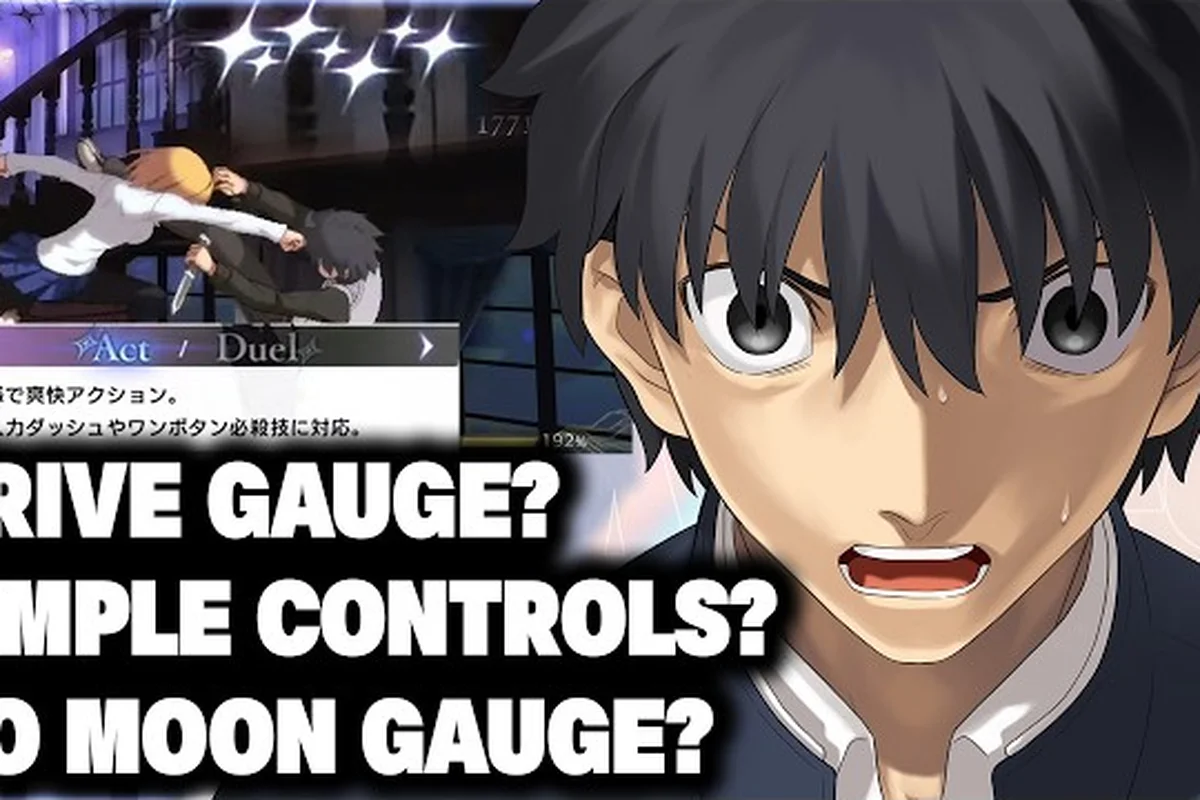
The Lumina Gauge replaces the Moon Gauge from Type Lumina and is the primary resource for the new universal moves. According to the August 2026 reveal covered by Saiga NAK, the gauge is star-like and sits below the health bar, and the Gauntlet technique consumes a chunk of it to blow opponents away. In pressure, the Lumina gauge is a threat layer: if you have stocks, the opponent has to respect Gauntlet, which widens your trap windows because they cannot mash for free. If you are empty, your pressure has to convert into a hit or a hard knockdown before you run out of resources.
| Lumina Stock State | Pressure Implication |
|---|---|
| Full gauge (3 stocks) | Opponent cannot mash Gauntlet-risk moves; trap margins widen |
| Mid gauge (1–2 stocks) | Threat layer still active; you can still bait mash into Gauntlet |
| Empty gauge | Pure frame trap pressure; must convert before Lumina regenerates |
| Lumina Burst active | Moon Drive legacy super; pressure becomes plus on most normals |
The trap math is the same, but the opponent's optimal defense shifts. A stocked Lumina player forces the defender to hold the string, which means your stagger normal will catch a mash more often than it would in Type Lumina.
Gauntlet as a Universal Mid-Screen Trap Closer
The Gauntlet is a new universal mid-screen push that hits on frame 1, has high active frames, and is a knockdown on hit. As a frame trap closer, Gauntlet beats any mash because its active frame 1 is faster than any character's 4-frame jab. The cost is the Lumina stock, but the reward is a guaranteed punish on the defender's defensive attempt. Use Gauntlet sparingly — once per string, ideally after you have conditioned the defender to respect your stagger normal.
Rapid Beat Autocombo Refresh
Enhanced Rapid Beat routes give you longer autocombo strings into special cancels, and the new autocombo cancels extend blockstun by chaining more hits. According to community data on Type Lumina's systems, Rapid Beat routes let you cancel at multiple points in the autocombo. The new enhanced routes give you more trap density because every cancel point is a place to insert a delayed normal that becomes a frame trap.
Character-Specific Trap Anchors: Where to Start
Every character in Twi-Lumina has at least one stagger normal that becomes the anchor for a string. The table below summarizes the most common trap anchors that community data has surfaced for the returning cast, but treat the exact frames as preliminary until the final move properties are locked. Frame data for new characters and updated moves is still being verified against the in-game tutorial.
| Character | Stagger Normal (Best Plus on Block) | Typical Plus Value | Trap Follow-Up |
|---|---|---|---|
| Shiki Tohno | 2A or 5B | +3 to +5 | 5A or 2C into Rapid Beat route |
| Tohno Shiki (kink) | 2B | +4 | 5C counter-hit frame trap |
| Arcueid | 2C | +5 | Gauntlet bait into 5A |
| Ciel | 5B | +3 | 2A chain into 5C |
| Hisui | 5A | +4 | 2B into special cancel |
| Kohaku | 2A | +3 | 5B into Rapid Beat |
| Maids (Hisui/Kohaku) | 2B | +4 | Throw bait into 5A |
| Akiha | 2C | +5 | 2A high-low mix on trap |
| White Len (DLC) | 2A | TBD | TBD — frame data pending launch |
White Len is the headline new fighter, and her move properties are still being characterized. The full character data for the new and returning roster is updated as the community verifies the values, so check that page when the game ships for the confirmed numbers.
Why Stagger Pressure Wins Most Matchups
Most characters in Twi-Lumina have at least one normal that leaves them +3 or better on block. That single value is enough to make a 5-frame or 6-frame follow-up a real trap against any 4-frame jab. The reason stagger pressure wins is that the defender only has a 2-frame throw and a 9-to-12-frame backdash as real answers to a properly timed trap, and both of those answers are themselves punishable. A 2-frame throw that reads a frame trap becomes a punished throw, and a backdash that reads a frame trap becomes a whiffed dash into your normal.
Hitbox and Hurtbox Geometry: Why Some Traps Whiff
Trap math is not just about frame counts. The hitbox of your follow-up and the hurtbox of your crouching or standing defender decide whether the move actually connects. A frame trap that is mathematically correct can still whiff if the hitbox is too high, too narrow, or too short.
Hitbox properties for Twi-Lumina are typically listed as a vertical range, a horizontal range, and the active frame window. The hitbox guide side of the character data is what tells you, for example, that Shiki's 2A hits crouchers but not standers, or that a specific 5C has a tall hitbox that will miss a crouching opponent. Pairing that with a hurtbox guide — which tells you how the character's body changes shape between stand, crouch, and jump — gives you the geometry you need to design traps that always connect.
The Three Hitbox Cases That Break Traps
There are three common geometry failures you will see when you start running traps from raw frame data.
| Geometry Case | Visual Cue | Fix |
|---|---|---|
| Tall hitbox on crouching defender | Move passes over the head | Use a low normal or chain into 2C |
| Narrow hitbox on back-dashing defender | Move passes through the body | Use a projectile or delay into a move that tracks |
| Short active window on jumping defender | Move whiffs under or behind | Use an anti-air normal instead of a stagger |
A clean trap string is one that picks a follow-up whose hitbox covers the opponent's expected hurtbox shape at the moment of contact. The full hitbox and hurtbox details for the cast are a separate article, but the geometry is the second half of every trap you will build.
Building a Trap String: A Practical Lab Workflow
A good lab session for a new character is 30 to 60 minutes and produces a working stagger string. The workflow is the same whether you are a beginner or a tournament player: list your plus normals, build a trap string, test it against an AI or a training dummy, and then test it in a real match.
| Step | Action | Output |
|---|---|---|
| 1 | List every normal that is +3 or better on block | Candidate stagger list |
| 2 | For each stagger, list every follow-up with 1–8f startup | Trap follow-up list |
| 3 | Run the stagger in training mode with the dummy set to mash 4f | Confirmed trap on mash |
| 4 | Run the same string with the dummy on 2f throw timing | Trap vs. throw read |
| 5 | Run the same string with the dummy on backdash timing | Trap vs. backdash read |
| 6 | Add a high-low or left-right mix after the trap is confirmed | Full pressure string |
| 7 | Test the full string in a real match for 5 rounds | Real-world confirmation |
The mashing dummy is the most important tool because it tells you whether your math is right. If the dummy is set to mash after blockstun and your follow-up does not land, your numbers are wrong or your timing is off. If the trap hits, you have a confirmed frame trap. The training mode and practice tools for Twi-Lumina include a recording dummy that lets you script the mash timing exactly, which removes the human timing variable from the test.
Common Lab Mistakes to Avoid
The most common mistake is testing the trap while still mashing the input yourself. The dummy has to do the mashing, not you, because the gap is measured from the opponent's first actionable frame. The second most common mistake is testing the trap with the dummy on "do nothing," which only confirms your hit-confirm, not the trap. Always test the trap on a mashing dummy, then re-test on a backdash dummy, then a throw dummy.
Defending Against Frame Traps: How the Defender Thinks
A good defender does not play the trap. They play the read. If they think you are about to run a 2A into 5A trap, they will hold the 2A and walk back to escape the 5A, or they will shield the 5A if the timing is right, or they will backdash and try to whiff-punish the 5A. The defender's job is to take the trap and convert it into a counter-attack. The trapper's job is to make sure the counter-attack is itself punishable.
There are four defensive options to consider when you are on the receiving end of Twi-Lumina frame traps, and each has a different answer. Throw tech is the safest if the opponent is running a delayed string with a throw at the end. Backdash is the safest if the opponent's follow-up is a single normal with no chain. Shield is the safest if the opponent is telegraphing a high follow-up. Reversal super is the safest if you read a long gap and the super's invincibility covers the recovery.
Counter-Trap Tools in the New Lumina Engine
The new Lumina engine gives the defender a stronger counter-trap tool than Type Lumina had. Shield / parry is still a universal defensive option, but with the new Lumina Burst system, defenders can cash a full gauge into a parry that converts into a combo on read. The full system mechanics guide for the Lumina engine covers the parry rules and the Lumina Burst windows in detail, but the headline for trap design is: at high Lumina stock, the defender's parry becomes a real threat, which means you have to bait it before you commit to the trap.
Frequently Asked Questions
What is the simplest frame trap in Melty Blood: Twi-Lumina?
The simplest trap is any 2A or 5B into a 5A or 2B follow-up, because 2A is almost always +3 on block across the cast, and a 5A or 2B comes out in 5 to 7 frames. That beats any 4-frame jab press and gives you a real trap on block. The Melty Blood: Twi-Lumina frame data sheets confirm the exact values per character once the game is in your hands.
How do I know my normal is plus on block?
The in-game tutorial, the official site, and the training mode dummy output all show the plus or minus value on block and on hit. The number is on the move's tooltip and in the frame data viewer. If you do not have access yet, the community character data for the returning cast is on the official wiki and the labbing Discord channels, but treat the numbers as preliminary until the in-game tutorial confirms them.
Why does my frame trap whiff against a crouching opponent?
The hitbox of your follow-up normal is too high to connect with the opponent's crouching hurtbox. Either switch to a low follow-up, chain into a 2C, or stagger the timing so the opponent has to stand to defend. The hitbox guide side of the move properties tells you which normals connect on crouchers, and the hurtbox guide tells you how the body shrinks when crouching.
Can a 2-frame throw beat a frame trap?
Yes, if the throw is timed correctly, a 2-frame throw can interrupt a frame trap because the throw's active frame is earlier than the trap's first active frame. The defense for a trapper is to either delay the pressure so the throw whiffs into a hit, or to bait the throw with an empty jump or a low normal that catches the throw startup. The full character data and move properties for the cast are in the official move list page.
How do the new Lumina systems change frame trap math?
The Lumina gauge, the Gauntlet, and Rapid Beat all change the trap math in your favor because they add more plus-on-block normals and more cancel points. The Gauntlet is a frame 1 active push that beats any mash, and the enhanced Rapid Beat routes extend blockstun on autocombo strings. The defender has to hold more of your pressure because the new systems give you more trap density per string.